
Wi-Fi site survey Liverpool
Define the wireless problem before choosing the hardware
A business Wi-Fi survey in Liverpool should answer a specific decision: where coverage is needed, why an existing network is struggling, or whether a finished installation meets the brief. Share your floor plan, applications and project stage with Global ITN to discuss the right scope. Predictive design, an onsite survey and post-installation validation answer different questions. Delivery arrangements, access, timing and the required outputs must be confirmed before any work is agreed.
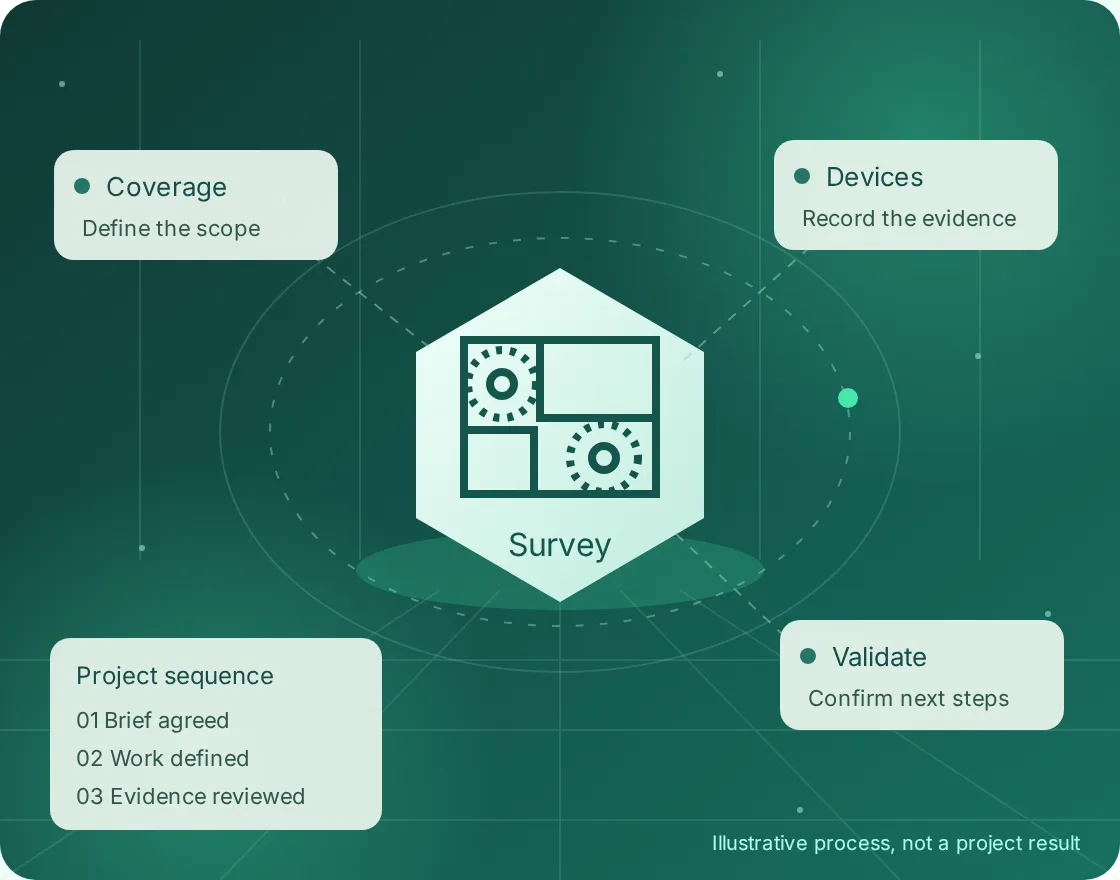
Choose the survey around the decision you need to make
Replacing every access point is not a starting assumption. First establish whether the project is a new layout, an occupied building with recurring problems, or acceptance of a recently installed network. Keep the business requirement separate from the equipment proposal. The survey brief should identify what needs measuring, who can approve changes and which findings will support the next investment decision.
- DefineSite, equipment and operational requirements.
- AgreeResponsibilities, access and acceptance checks.
- RecordFindings, exceptions and the next actions.
Start with the building and the people using it
Provide a current, scaled floor plan and mark desks, meeting rooms, shared workspaces and any areas where connectivity matters during movement. Record construction materials, ceiling heights, expected occupancy and restrictions on mounting or cable routes. A drawing that omits a partition or labels the wrong floor can lead to a misleading design, so identify uncertain details before treating the plan as a reliable model.
For a Liverpool city-centre office, record the actual site and floor rather than assuming that one building resembles another. For a project in Speke or Garston, use the same site-specific approach: the council describes a neighbourhood with a substantial business presence, but an area name does not establish the layout or wireless conditions inside your premises. Confirm landlord permissions, escort requirements and access to occupied rooms.
List the devices and applications that need to work. Laptops, handheld devices and meeting-room systems may have different requirements. Explain where people sit, where they walk and which spaces fill up at busy times. This makes the brief useful for design and for the later acceptance checks, without inventing a universal access-point count.

Separate predictive design from measured findings
A predictive Wi-Fi design uses the proposed layout and building information to model coverage and candidate access-point positions. It can support an office move or refit before the finished space is available. Its assumptions need to be explicit: wall types, mounting positions, occupancy and the client requirements the design is intended to meet.
An onsite wireless site survey examines the physical environment. For an existing network, agree the areas, operating conditions and tests needed to investigate the reported problems. For a new network, identify which design assumptions need a physical check before equipment or cabling decisions become difficult to change. Do not present a predicted plot as a measurement from the premises.
Post-installation validation is a further stage. Its purpose is to compare the deployed network with agreed requirements and record exceptions. Keep the approved plan and any installation changes beside the results so that a moved access point or an inaccessible room is visible in the handover.
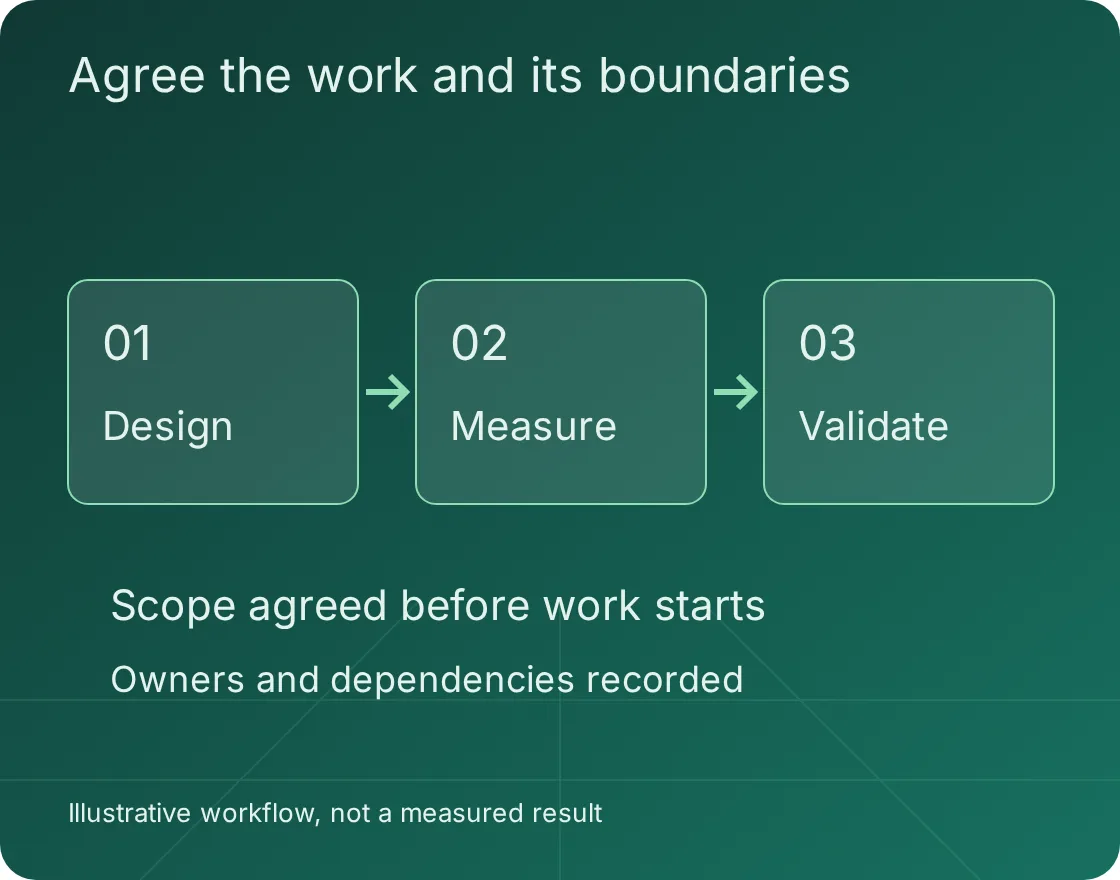
Turn Wi-Fi complaints into repeatable tests
A report that Wi-Fi is slow is a useful starting point, not a diagnosis. Record the location, time, application and device involved. Ask whether the issue occurs while stationary, when entering a meeting room, or when moving between spaces. Where practical, provide examples that the technical owner can reproduce rather than relying only on recollection.
Agree what successful voice, video, browsing or business-application use means for this project. Coverage and capacity are different questions, and a strong signal alone does not prove that an application behaves acceptably. Test conditions should describe the relevant occupancy, device types and movement routes so that later comparisons have a clear basis.
Keep upstream dependencies in view. Switching, cabling, authentication, internet connectivity and application performance can affect the user experience. The survey handover should distinguish a wireless finding from a dependency that needs investigation by another owner. Changes to a working network should remain subject to the agreed approval process.
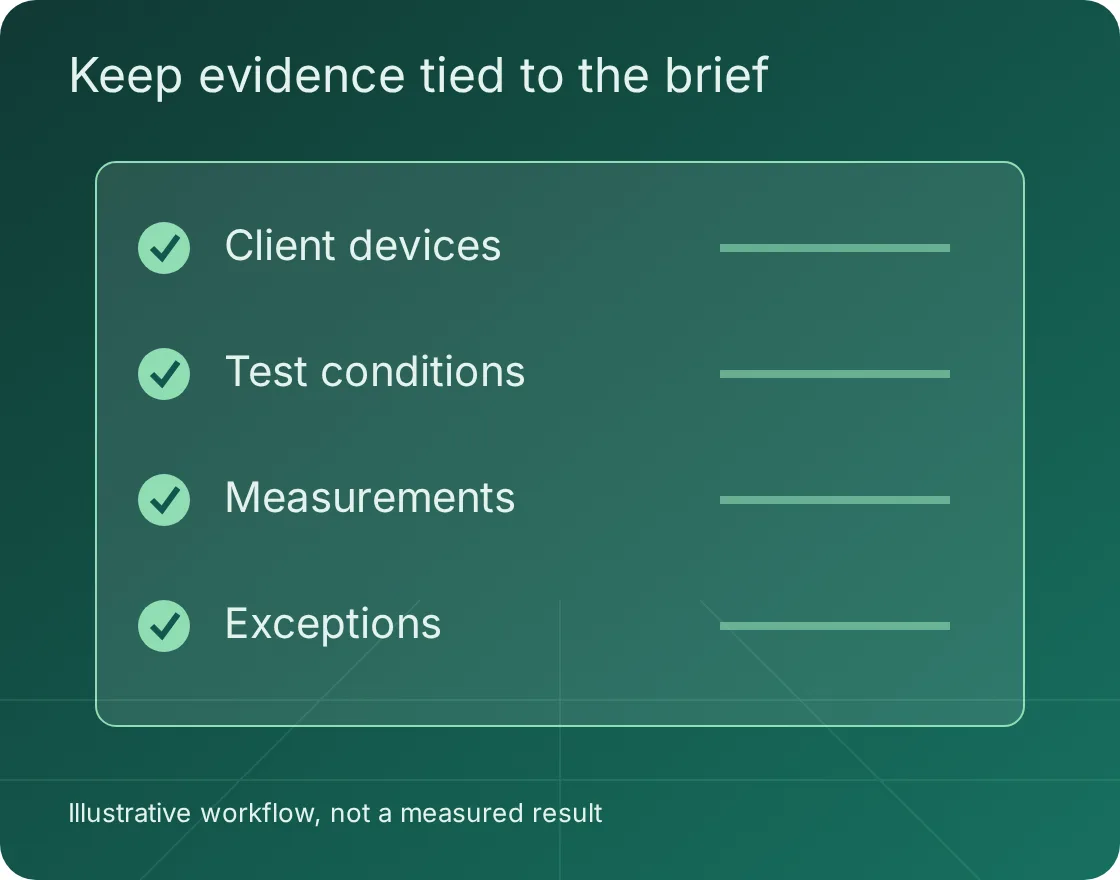
Use the handover to agree a practical next step
Ask for findings, assumptions and recommendations to be clearly separated. The report should explain why an access-point move, configuration review, additional cable route or further investigation is proposed. Mark rooms that could not be accessed and tests that could not be completed instead of treating an incomplete visit as full acceptance.
Prioritise actions by the business requirement they support and assign an owner for each next step. A survey does not automatically include implementation, new hardware, remediation or ongoing support. Agree those workstreams separately, including who will authorise changes and who will check the result afterwards.
For an MR deployment, use the separate Cisco Meraki survey brief to capture model, radio and Dashboard details. For a broader project comparison, the Manchester Wi-Fi survey page follows the same requirement-led planning approach. Neither example substitutes for a survey of the Liverpool premises.
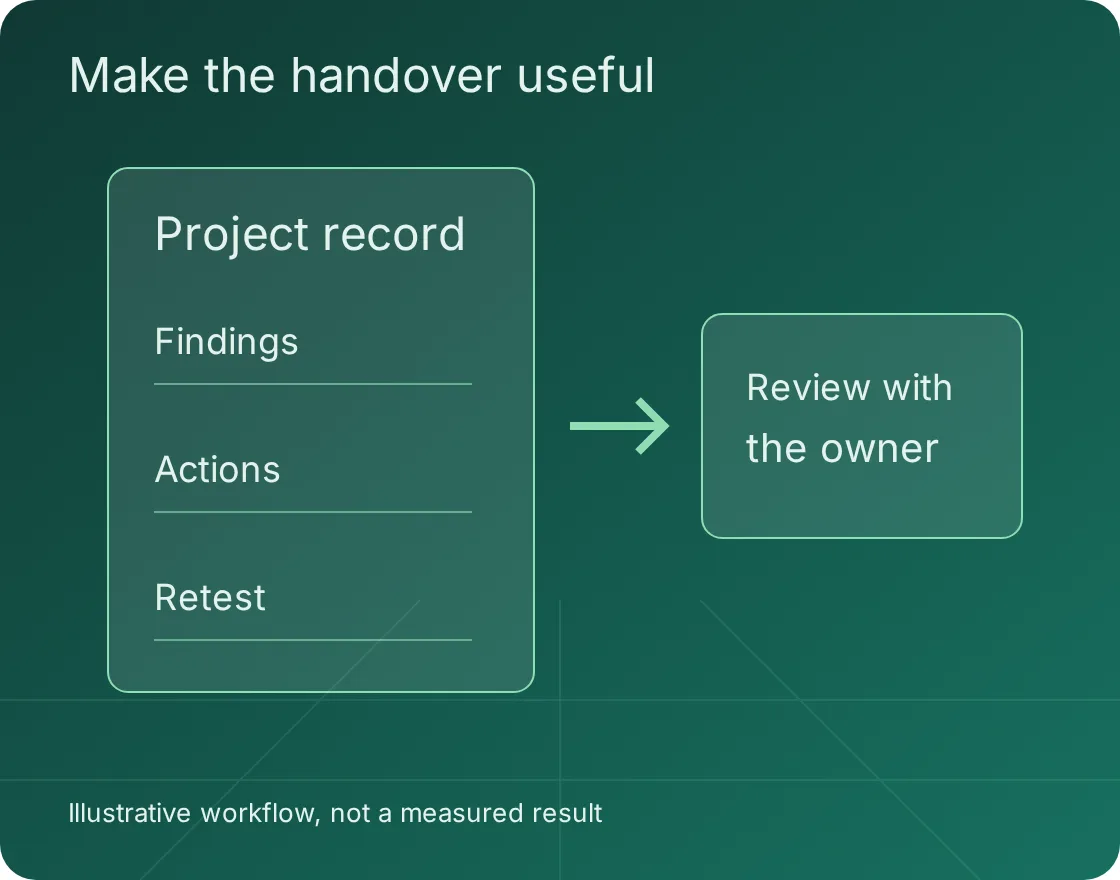
Bring the information that makes scoping useful
Missing information can be identified during the discussion. Label assumptions rather than presenting them as confirmed site conditions.
- The premisesAddress, floor plans, occupied areas, access windows and permissions.
- The symptomsDevices, applications, affected rooms, times and movement routes.
- The decisionNew design, fault investigation, refresh or installation acceptance.
- The handoverTest conditions, report format, exceptions, next actions and owners.
Questions before you agree the work
Can we arrange a survey before the fit-out is complete?
A predictive design can start from the proposed layout, provided its assumptions are clear. Physical checks and validation may still be needed when partitions, furniture and access-point positions are in place. Agree which stage the requested work covers.
Does a survey mean buying new access points?
No hardware replacement should be assumed from the request alone. Placement, configuration, interference, capacity or an upstream dependency may need attention. Use findings and application requirements to decide what to change.
Can our existing IT supplier stay involved?
Identify the roles of your internal team, incumbent supplier and survey workstream in the brief. Confirm who supplies access, who can approve changes and who owns follow-up work. An enquiry does not transfer those responsibilities.
Discuss your Liverpool Wi-Fi survey
Send the site details, floor plans and the decision the survey needs to support. Global ITN can discuss the brief and confirm whether the requested delivery arrangements can be offered before a commitment is made.