
Scope the project before committing to site work
Rack-and-stack engineers for Glasgow projects
Make the remote handover part of the installation plan
A Glasgow rack-and-stack request led by an off-site technical team needs precise instructions and an evidence format that works within facility rules. Define both before arranging attendance.
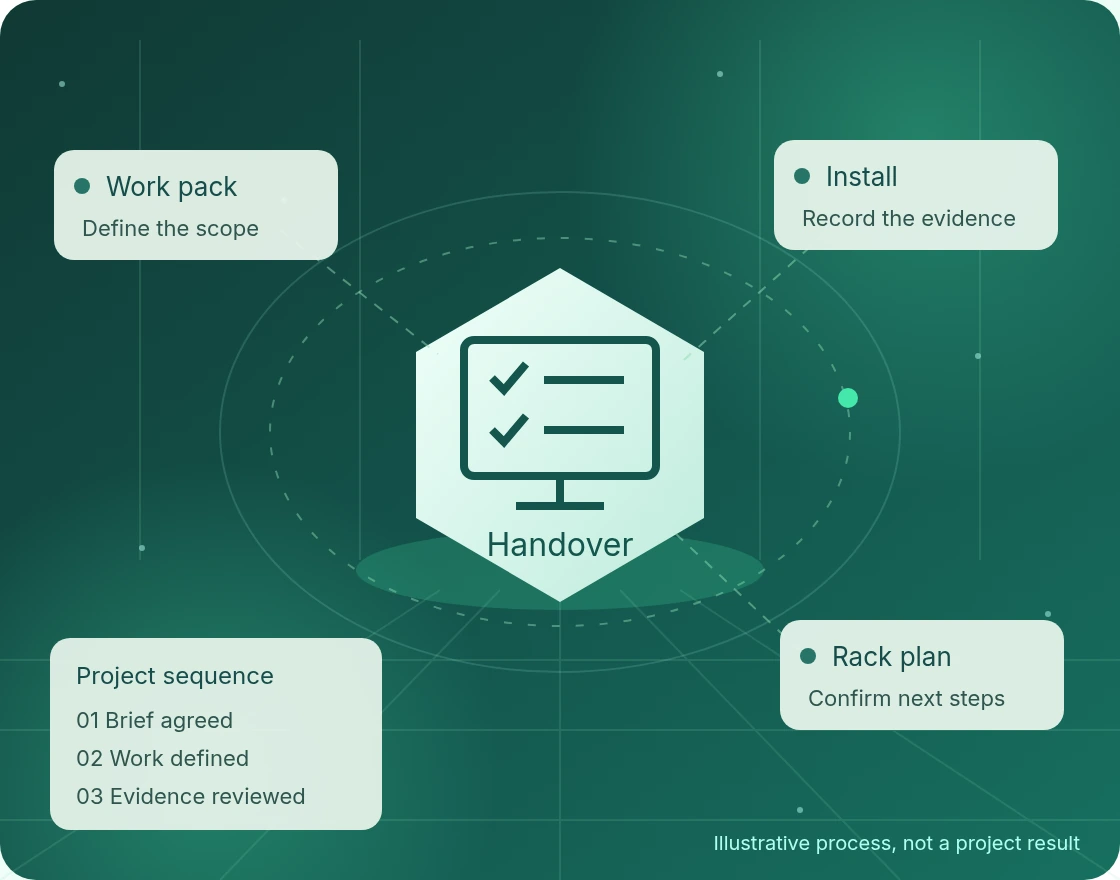
Scope the project before committing to site work
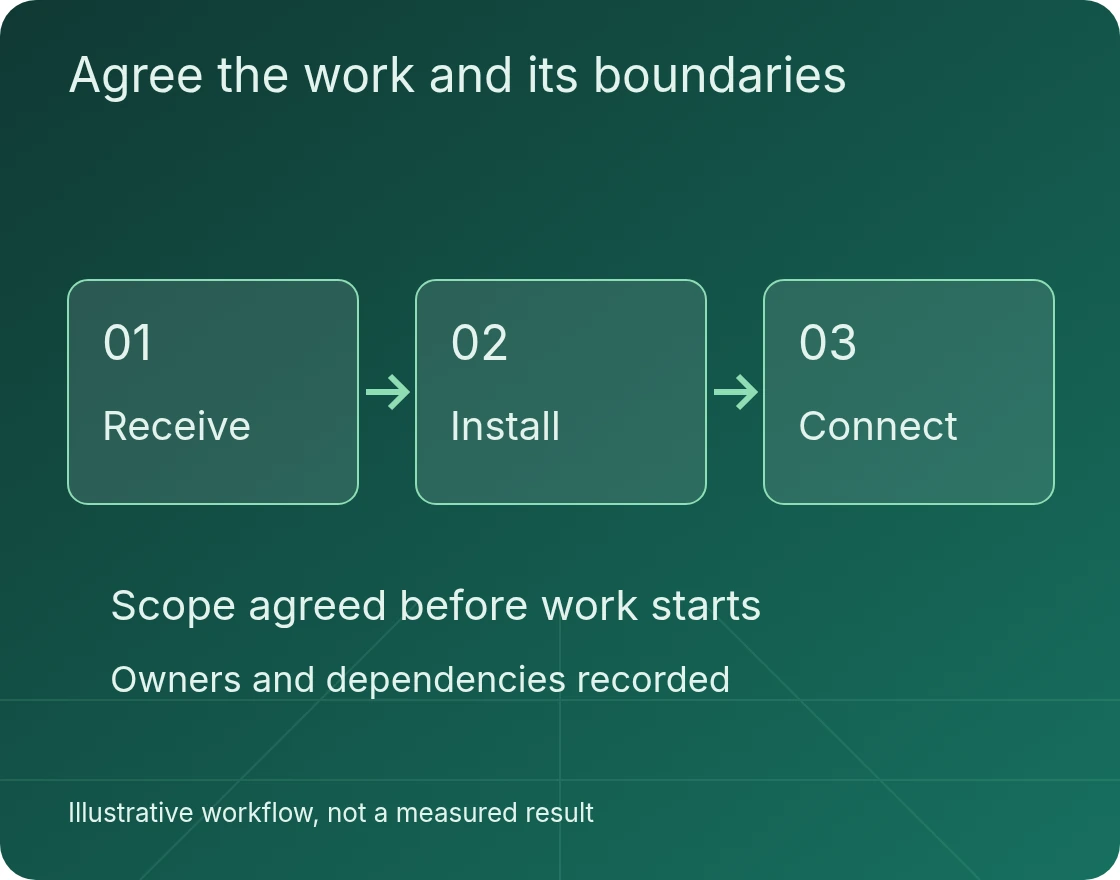
For a Glasgow project, share the location and requirements with Global ITN. Scope, delivery arrangements, access and timing are confirmed before any work is agreed. The brief should identify what must happen on site and what your own technical team will retain.
- DefineSite, equipment and operational requirements.
- AgreeResponsibilities, access and acceptance checks.
- RecordFindings, exceptions and the next actions.
Write instructions another team can execute
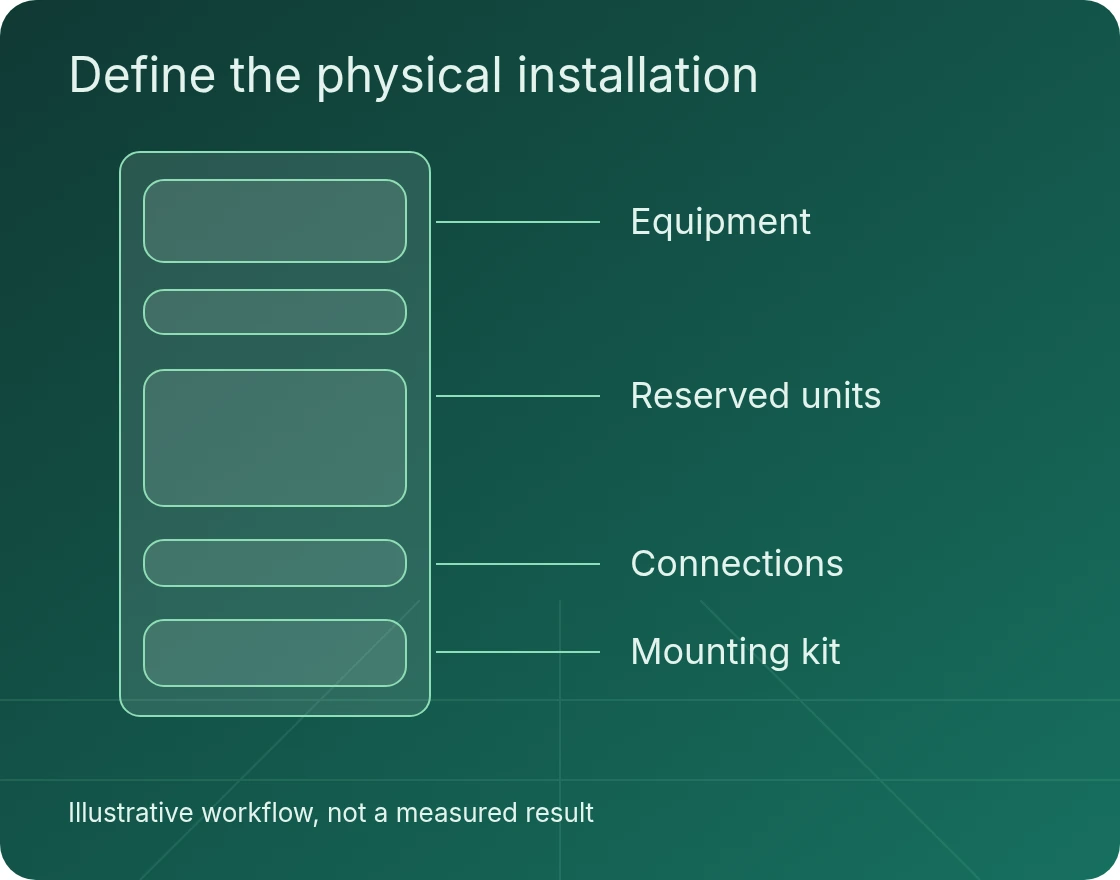
Provide the approved rack elevation, equipment identifiers, mounting requirements and power and port schedules. State the exact physical tasks included and the technical owner who can answer an exception. Instructions should be usable without relying on undocumented knowledge held by someone away from the site.
For a Glasgow request, distinguish confirmed site conditions from assumptions in the work pack. Equipment arrival, reserved space, rails, access and handling requirements each need an owner. A remote approval does not make an unresolved physical prerequisite ready.
As an equipment-manufacturer example, Dell provides server-specific rail installation instructions and a rail sizing and rack compatibility matrix.
Choose evidence before work begins
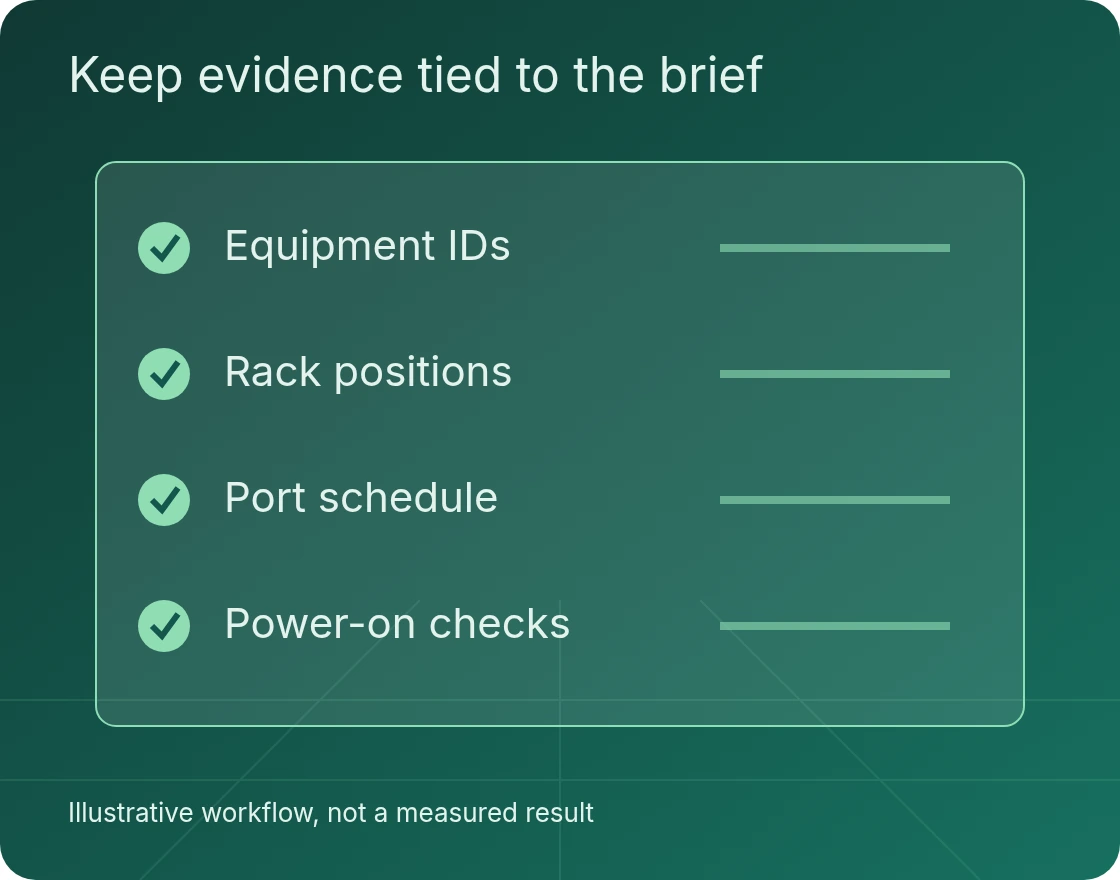
Agree the records needed to demonstrate the assigned installation: identifiers, positions, connections, checks and exceptions. Photographs can be discussed only within the customer and facility permissions. Do not design a handover that depends on evidence the site is not allowed to collect.
Set an approved communication route and identify the decision-maker available during the window. The reporting plan should distinguish routine progress from a discrepancy needing authorisation. A missing component or mismatched port is not something to hide inside a general update that work is continuing.
Define what the remote team will accept
Separate mounted, connected, physically checked and configured states. The installation workstream should report only the checks it was assigned and performed. Operating systems, network settings, security controls and applications need their own scope and technical acceptance evidence.
Agree who can authorise a change to the rack position, connection or installation sequence. If the remote decision-maker is unavailable when a mismatch appears, the work pack needs a stop or escalation rule rather than giving the installer discretion to redesign the environment.
Keep the final record usable for support
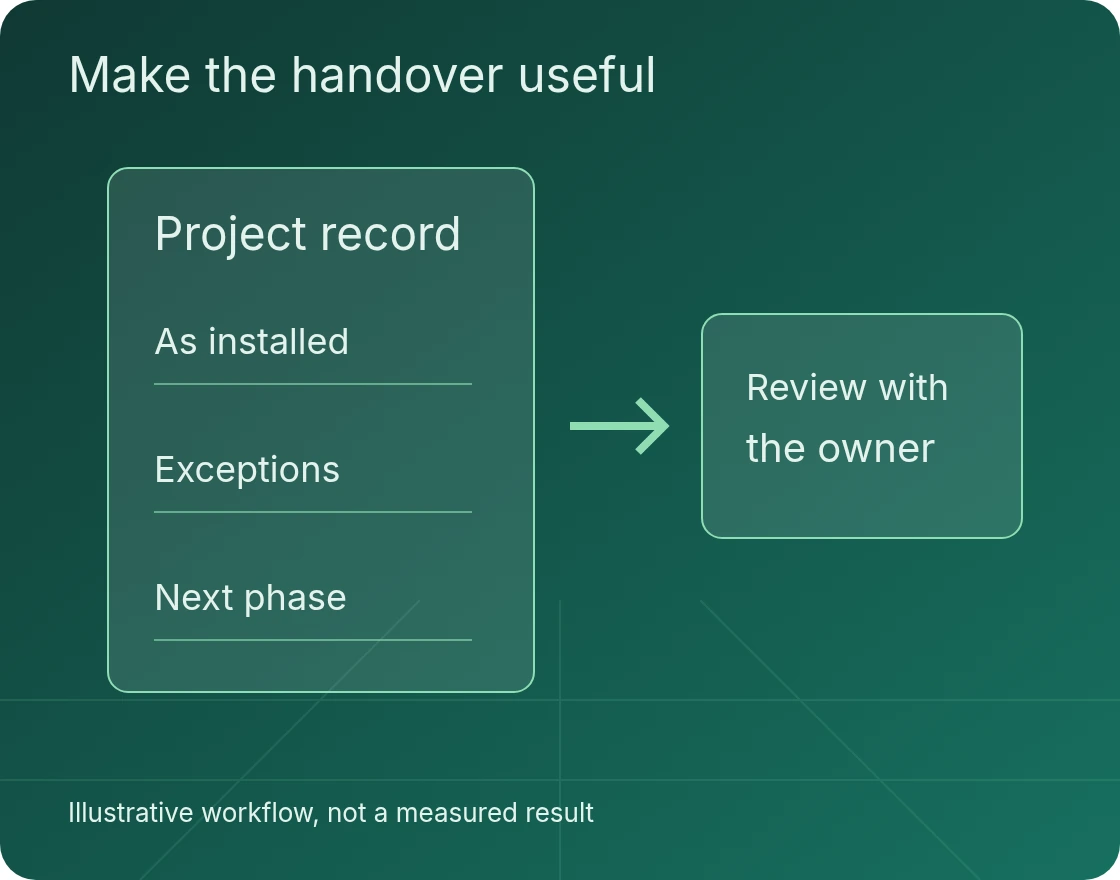
Reconcile the installation with the approved plan and retain the final asset and connection record. List incomplete items with an owner and next action. That gives the remote team a basis for commissioning and later support without overstating the installed service state.
If later work changes the rack or connections, update the record through the customer process. The original handover remains evidence of what happened in this window, not a permanent representation of every future configuration or approval for further installation.
Bring a brief the delivery team can use
Incomplete information can be identified during scoping. Do not treat an assumption as a confirmed site condition.
- The equipmentDevice list, dimensions, weights and manufacturer mounting requirements.
- The rackApproved rack elevation, reserved units and mounting hardware.
- The connectionsPower and port schedules, cable routes and labelling requirements.
- The work windowArrival status, facility approvals, technical owner and acceptance record.
Questions before you book the work
Can we specify our own handover format?
Provide it during scoping, including the required checks, identifiers and information restrictions. The agreed record must remain practical for the actual facility and work assigned.
Does a power-on check mean the service is accepted?
No. Physical checks and logical commissioning are different stages. Application readiness needs evidence from the team responsible for that service.
What happens if the remote approver is unavailable?
Agree a stop and escalation process before attendance. A missing decision-maker should not become implied permission to change the approved plan.
Discuss your Glasgow project
Send the equipment schedule, facility location, rack plan and required installation window. We can discuss the brief and confirm whether the requested delivery arrangements can be offered before a commitment is made.