
Scope the project before committing to site work
Rack-and-stack engineers for Birmingham projects
Control the physical side of an equipment refresh
For a Birmingham rack refresh, the important record is what will be removed, retained and connected after the change. Build the installation sequence around approved dependencies and a clear stop rule.
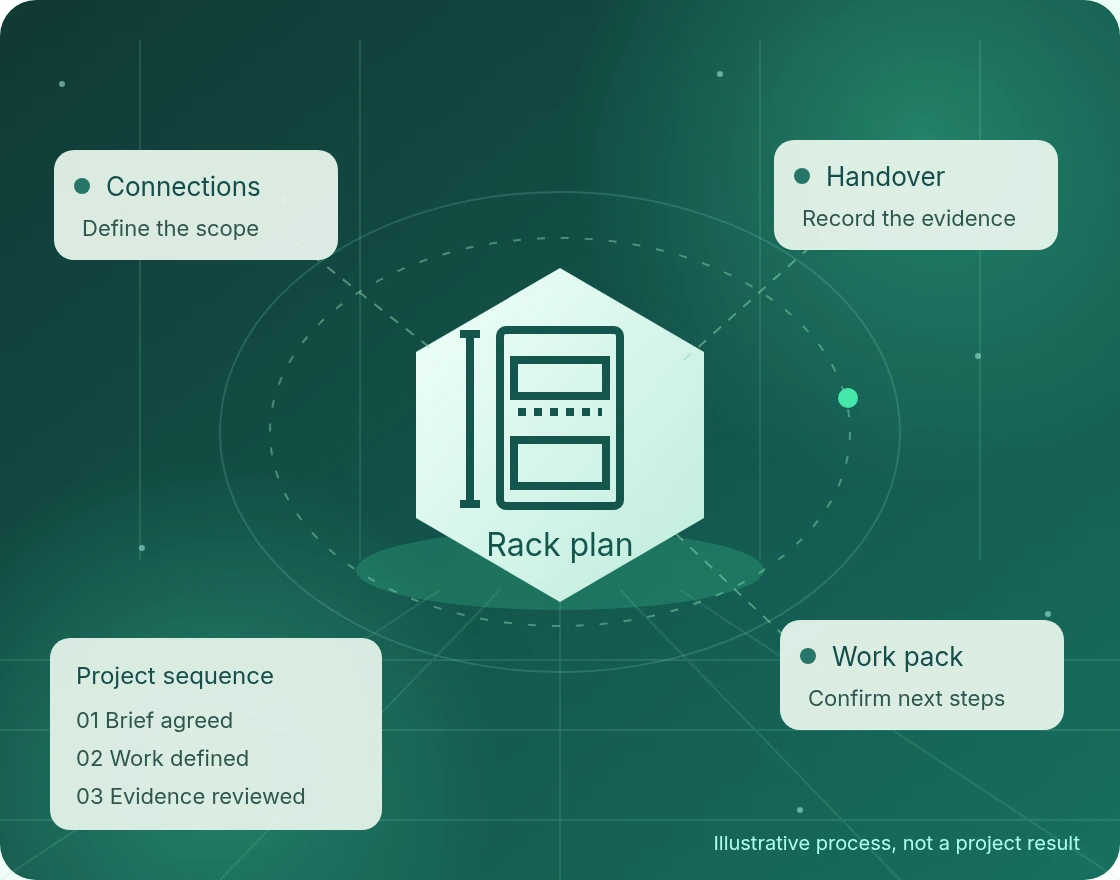
Scope the project before committing to site work
For a Birmingham project, share the location and requirements with Global ITN. Scope, delivery arrangements, access and timing are confirmed before any work is agreed. The brief should identify what must happen on site and what your own technical team will retain.
- DefineSite, equipment and operational requirements.
- AgreeResponsibilities, access and acceptance checks.
- RecordFindings, exceptions and the next actions.
Distinguish retained and replacement equipment
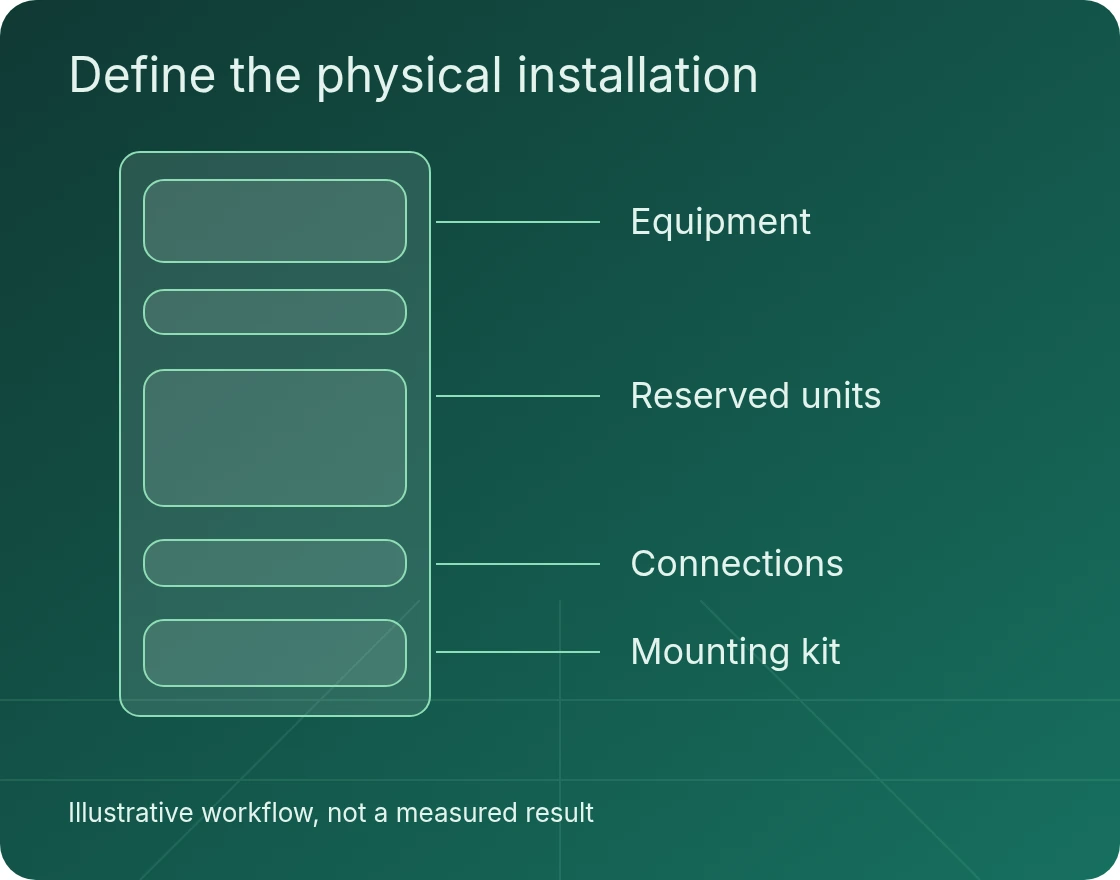
Supply the existing and proposed rack elevations, equipment identifiers and the devices included in the refresh. Check dimensions, weights and mounting requirements for the replacement hardware. A device with the same business role may use different rails, rack units or connection arrangements.
For a Birmingham refresh request, mark equipment and connections that are outside scope. Physical removal, transport, storage, disposal and data handling are separate responsibilities. None should be inferred from an instruction to replace a device in a rack.
As an equipment-manufacturer example, Dell provides server-specific rail installation instructions and a rail sizing and rack compatibility matrix.
Create a verifiable transition record
Provide a port and power schedule showing the approved starting and finishing state. Define the labelling convention and the person authorised to approve each disconnect and reconnection. A current, verified record is more reliable than colour coding or an old photograph alone.
If a connection cannot be identified, record the exception and obtain direction before touching it. The work pack should state that uncertainty is a stop condition. Preserving a live service is not compatible with guessing which undocumented connection can be removed.
Align the physical sequence with change authority
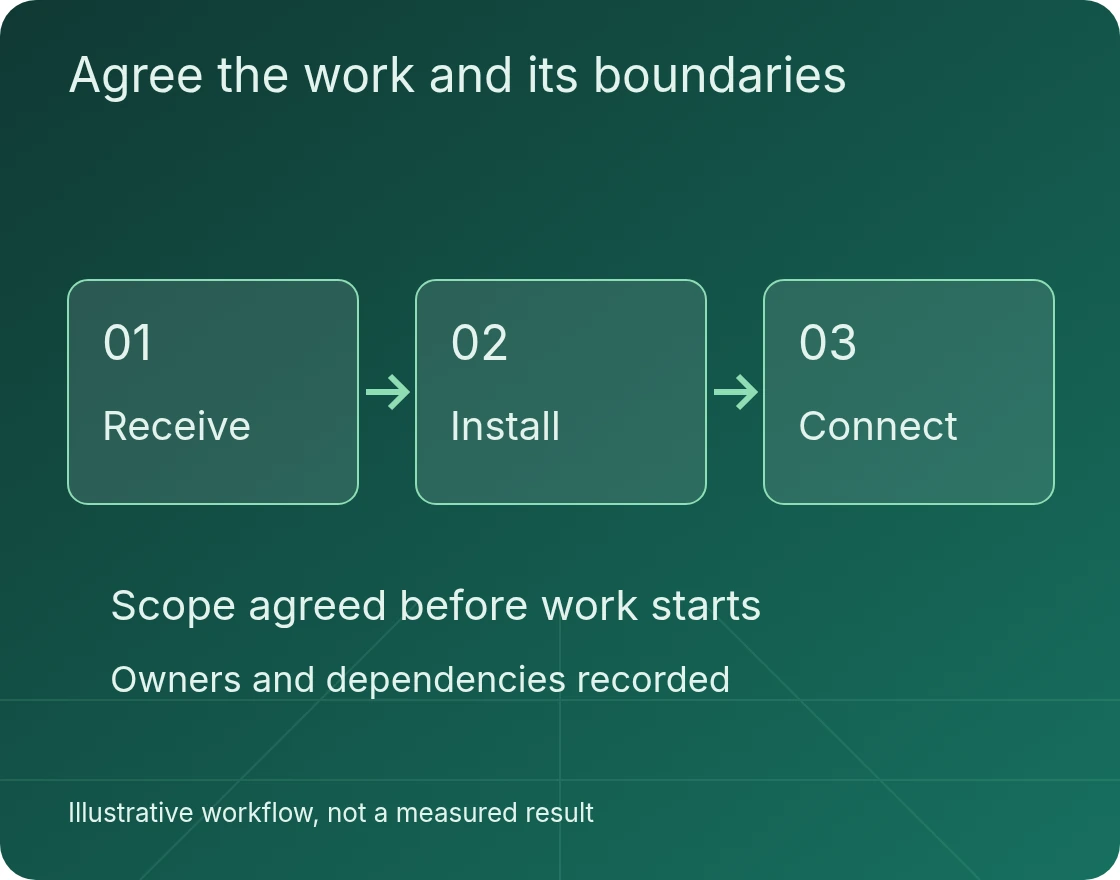
The customer technical owner assigns shutdown, restart, service-check and rollback responsibilities. Keep the installation sequence aligned with that approved plan. Physical installers should not decide whether an application is safe to stop or whether a failed technical test is acceptable.
Confirm the required hardware, cables, facility approvals and technical staff before the agreed window. Record what happens if a prerequisite is missing. A reserved timeslot is not a reason to proceed with a different device, rack position or connection from the authorised design.
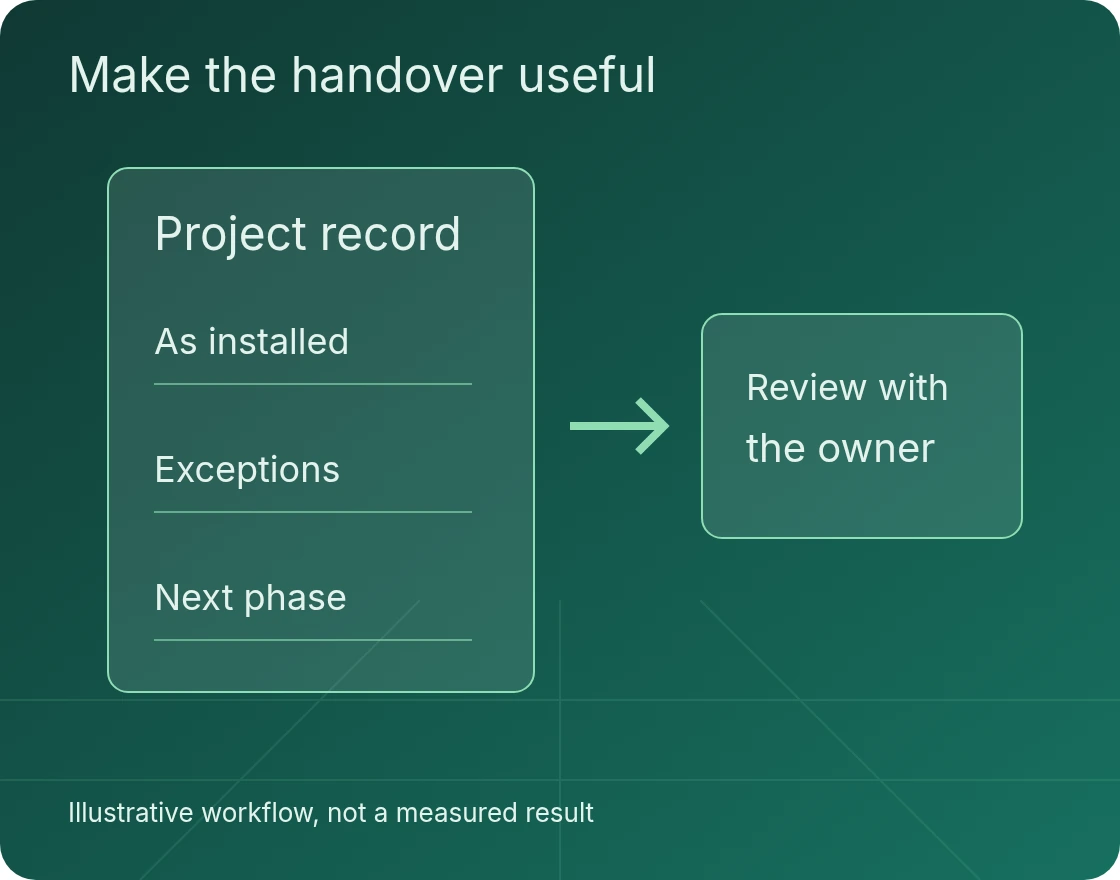
Retain both the change and final installation record
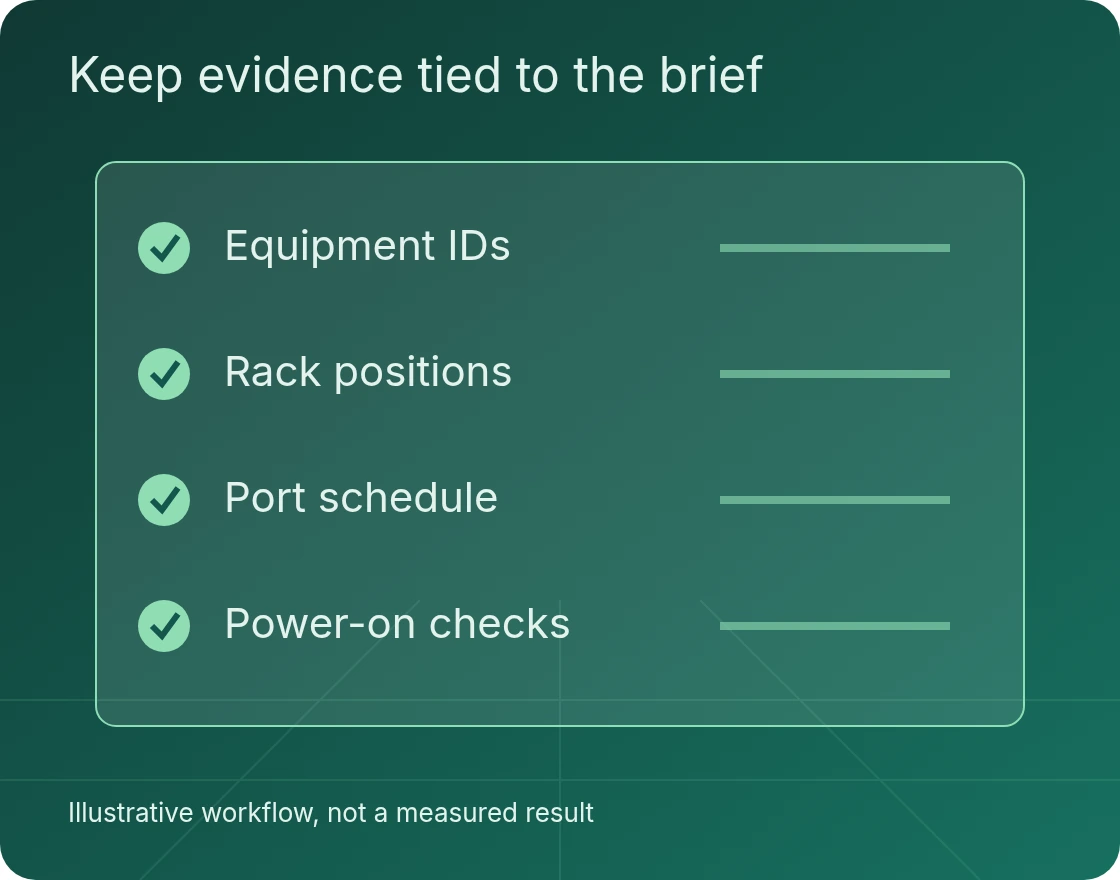
Update the rack, asset and connection information after the approved work, keeping a clear version difference from the pre-change pack. Record checks performed and exceptions still awaiting another owner. Avoid treating a physically mounted replacement as proof that commissioning is complete.
The handover should identify the work actually carried out and any separately authorised departure from the plan. Design corrections or additional configuration discovered during the refresh should remain visible as separate decisions rather than becoming undocumented scope changes.
Bring a brief the delivery team can use
Incomplete information can be identified during scoping. Do not treat an assumption as a confirmed site condition.
- The equipmentDevice list, dimensions, weights and manufacturer mounting requirements.
- The rackApproved rack elevation, reserved units and mounting hardware.
- The connectionsPower and port schedules, cable routes and labelling requirements.
- The work windowArrival status, facility approvals, technical owner and acceptance record.
Questions before you book the work
Does removing hardware include disposing of it?
No. Disposal, transport, storage, insurance and any data-handling obligations need separate explicit responsibilities and authorisation.
Can the installer correct an outdated port schedule?
An observed discrepancy can be recorded, but the intended connection needs confirmation from the authorised technical owner before the plan is changed.
What should be checked after the physical refresh?
Agree the physical and connection checks in advance, with separate owners for configuration, application validation and service acceptance. Keep unresolved results visible in the handover.
Discuss your Birmingham project
Send the equipment schedule, facility location, rack plan and required installation window. We can discuss the brief and confirm whether the requested delivery arrangements can be offered before a commitment is made.