
Scope the project before committing to site work
Wi-Fi surveys in Melbourne
Understand intermittent wireless faults before changing the network
When users report weak coverage or unreliable connections, a structured survey helps separate radio-frequency (RF) conditions, device behaviour and wider network dependencies.
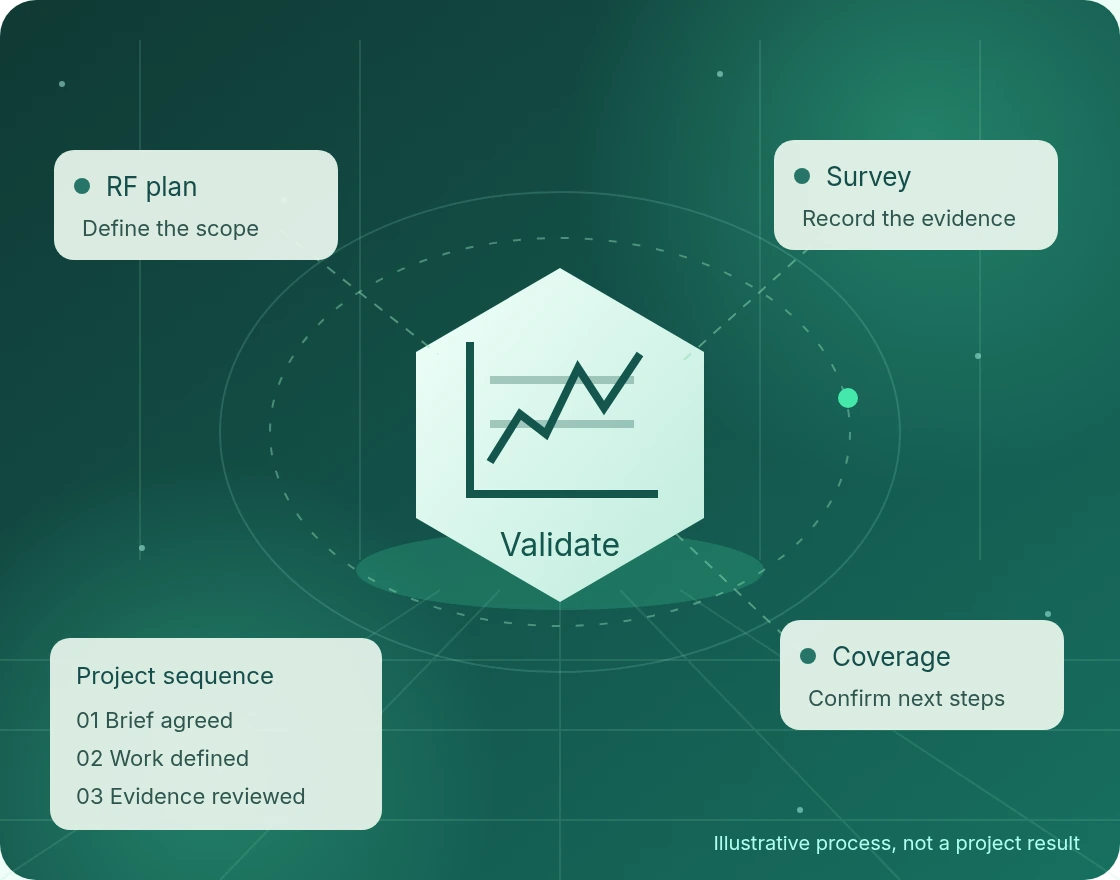
Scope the project before committing to site work
For a Melbourne project, share the location and requirements with Global ITN. Scope, delivery arrangements, access and timing are confirmed before any work is agreed. The brief should identify what must happen on site and what your own technical team will retain.
- DefineSite, equipment and operational requirements.
- AgreeResponsibilities, access and acceptance checks.
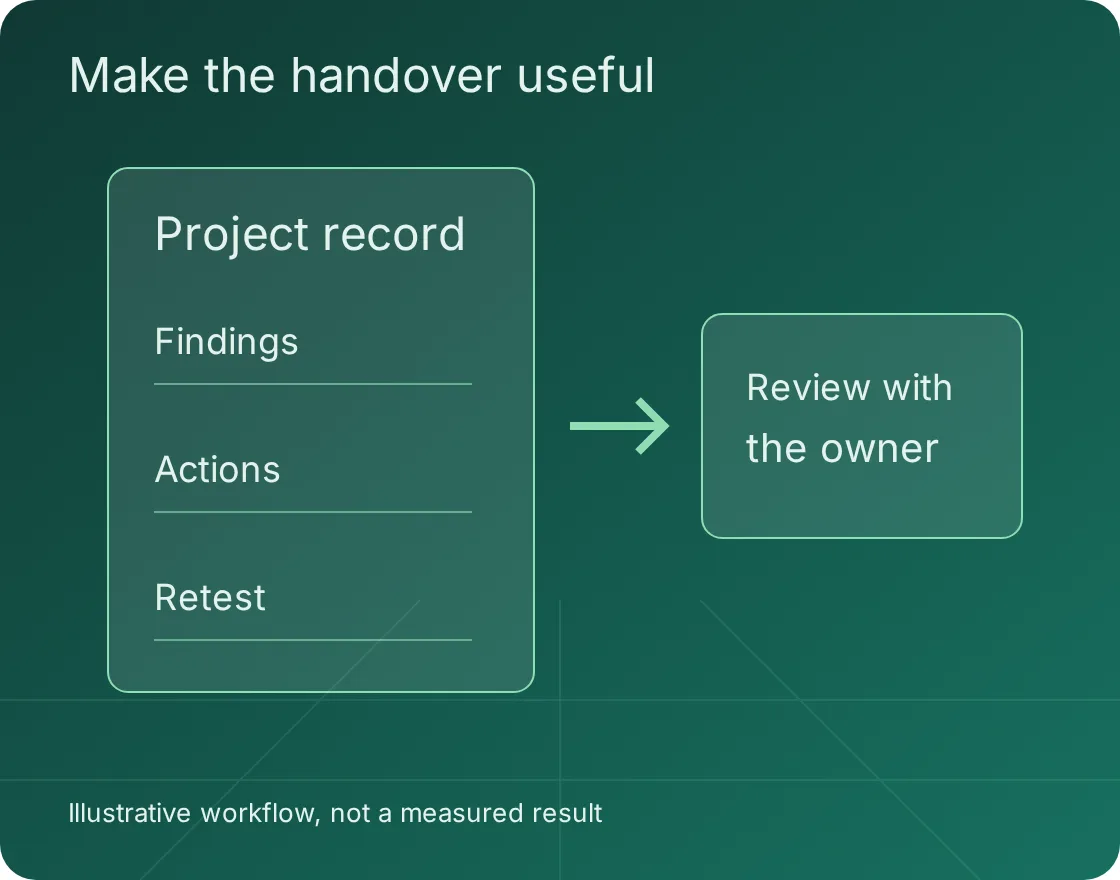
- RecordFindings, exceptions and the next actions.
Turn user complaints into testable questions
For an occupied Melbourne site, group reports by room or zone, time, device and application. Record whether the issue affects a stationary user, a moving device or everyone in a busy area. That gives the assessment a clearer purpose than a request to improve Wi-Fi.
Keep an issue log with enough detail to reproduce the problem without collecting unnecessary personal information. State any restrictions on testing production applications or observing traffic before site work is arranged.

Check more than a signal indicator
Signal strength is one input. Signal quality, interference, channel use, overlap and capacity can also affect the connection. The test plan should relate those measurements to the applications and devices the organisation actually uses.
Authentication, wired uplinks and application services may need separate investigation. A wireless report should identify evidence for each finding and make clear when a suspected cause sits outside the survey’s agreed scope.
Cisco identifies client-device and application requirements as inputs to survey planning.
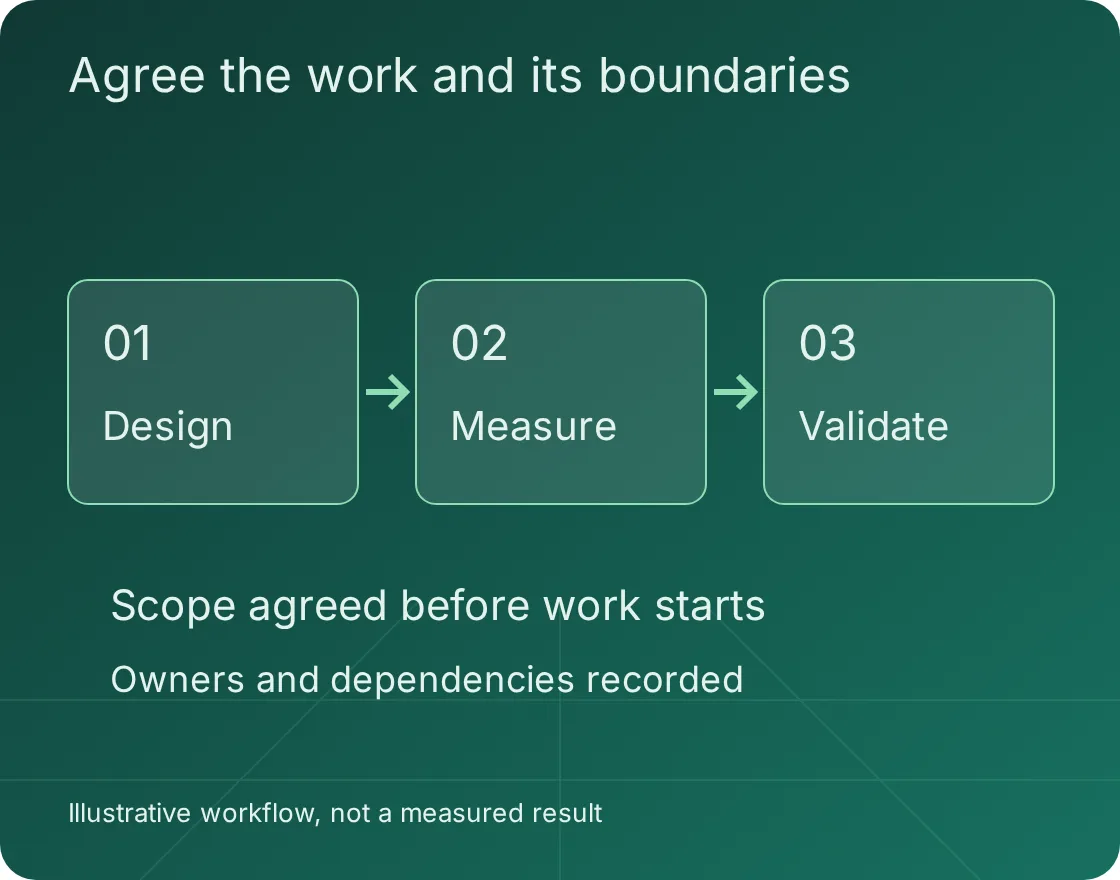
Plan measurements around the occupied site
Agree access to rooms, operating hours and any sensitive areas. If the site cannot be assessed under representative load, record that limitation. Changes to access points or network settings should follow a separate approved change plan.
Passive measurements can document the present wireless environment. Active performance tests, temporary equipment and any configuration changes require their own agreed conditions. The customer decides what is acceptable for the occupied site before those activities begin.
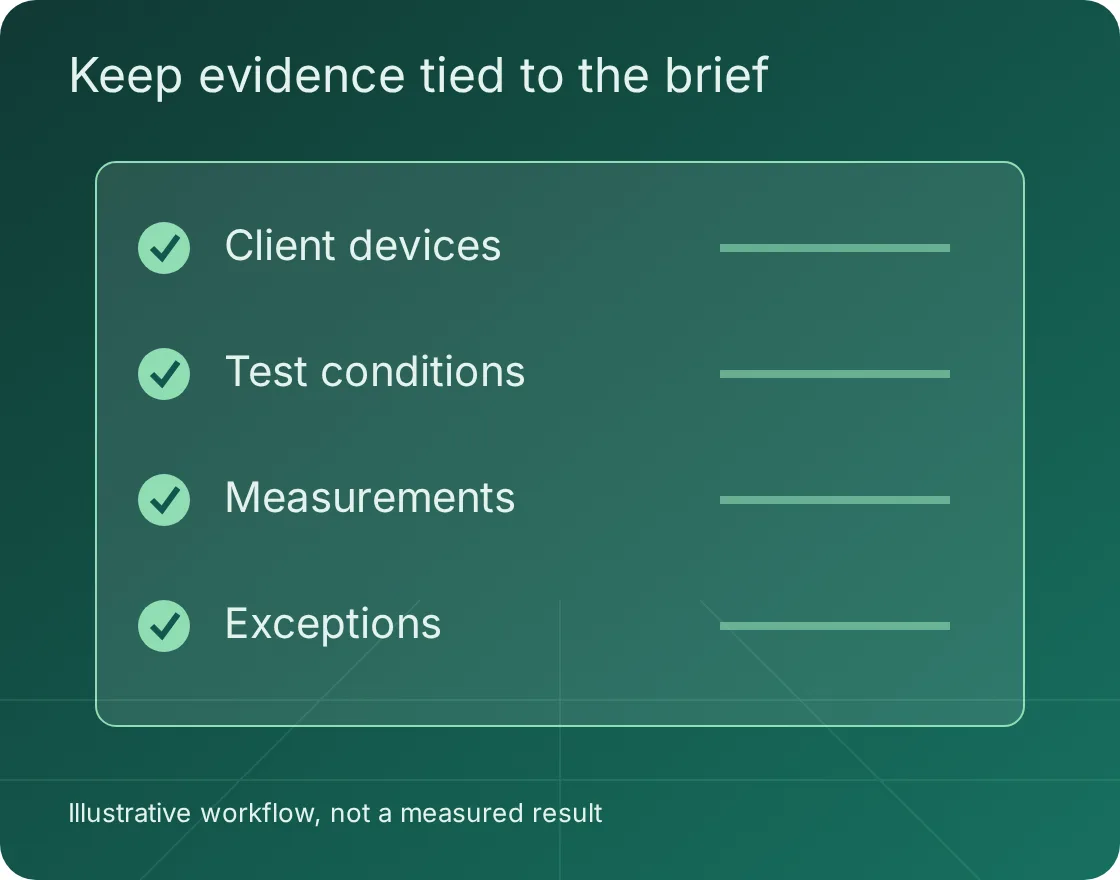
Make the retest part of the remedy
Choose acceptance checks before implementing the recommendations. Retest the reported problem areas and relevant movement paths, using comparable devices and conditions where practical. Document what improved and what still needs work.
A clear handover links findings to actions and owners. It should let your IT team distinguish an RF change from a cabling, authentication or application task and avoid repeating an investigation that has already been completed.
Bring a brief the delivery team can use
Incomplete information can be identified during scoping. Do not treat an assumption as a confirmed site condition.
- The buildingFloor plans, layouts, access restrictions and project stage.
- The users and devicesApplications, client devices, movement paths and problem reports.
- The decisionDesign, diagnosis, refresh or acceptance of a finished installation.
- The outputRequired report format, test conditions, actions and owners.
Questions before you book the work
Will a survey prove every intermittent fault?
No single visit guarantees reproduction of every intermittent event. Agree the observation window, gather a useful issue history and record any conditions that were not present during testing.
Can you assess a network we did not buy from Global ITN?
The assessment can be discussed around the existing environment and access available. Confirm the equipment, permissions, information and responsibilities before a scope is accepted.
Can the findings support a refresh business case?
A report can document the measured conditions and reasons for proposed work. It should not claim that a hardware refresh is necessary unless the evidence and requirements support that conclusion.
Discuss your Melbourne project
Send the floor plans, device requirements and the decision the survey needs to support. We can discuss the brief and confirm whether the requested delivery arrangements can be offered before a commitment is made.