
Scope the project before committing to site work
Wi-Fi surveys in Sydney
Give regional IT one clear survey and acceptance brief
A Sydney site should be assessed against its own layout and applications while keeping the reporting useful to the team responsible for the wider network.
Scope the project before committing to site work
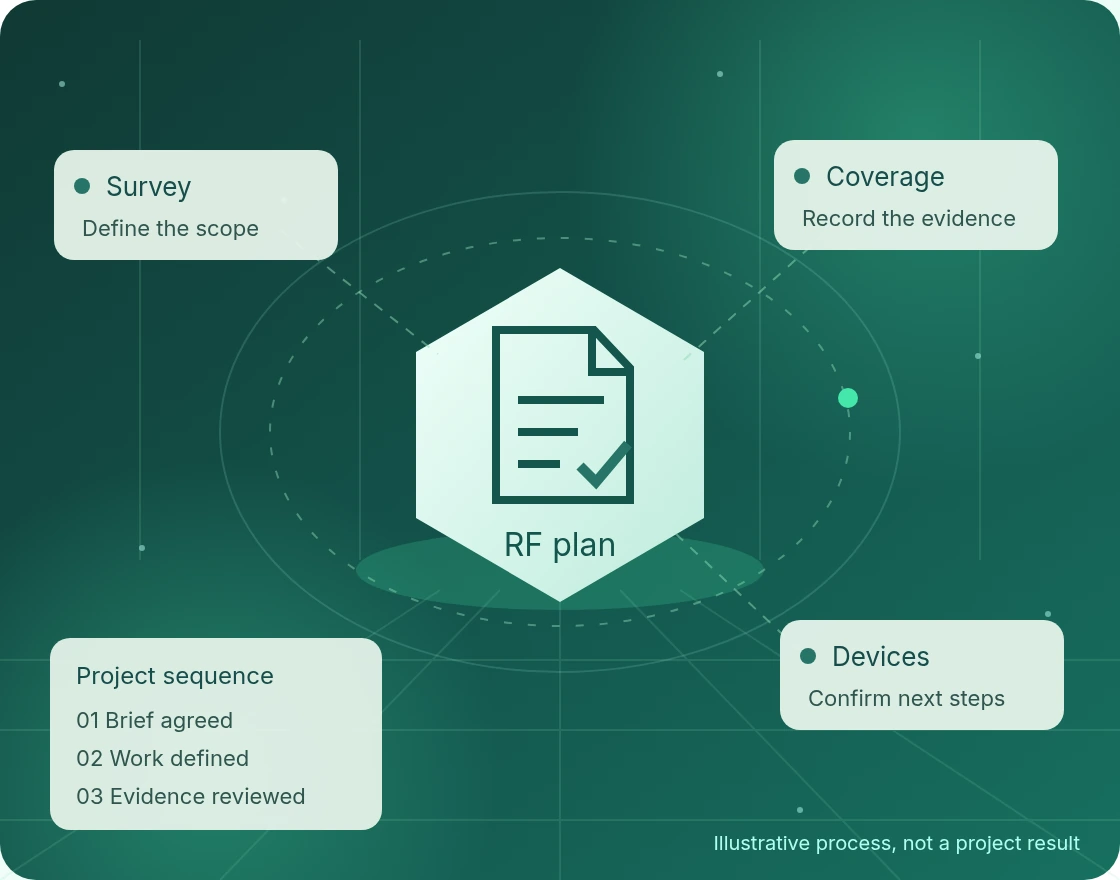
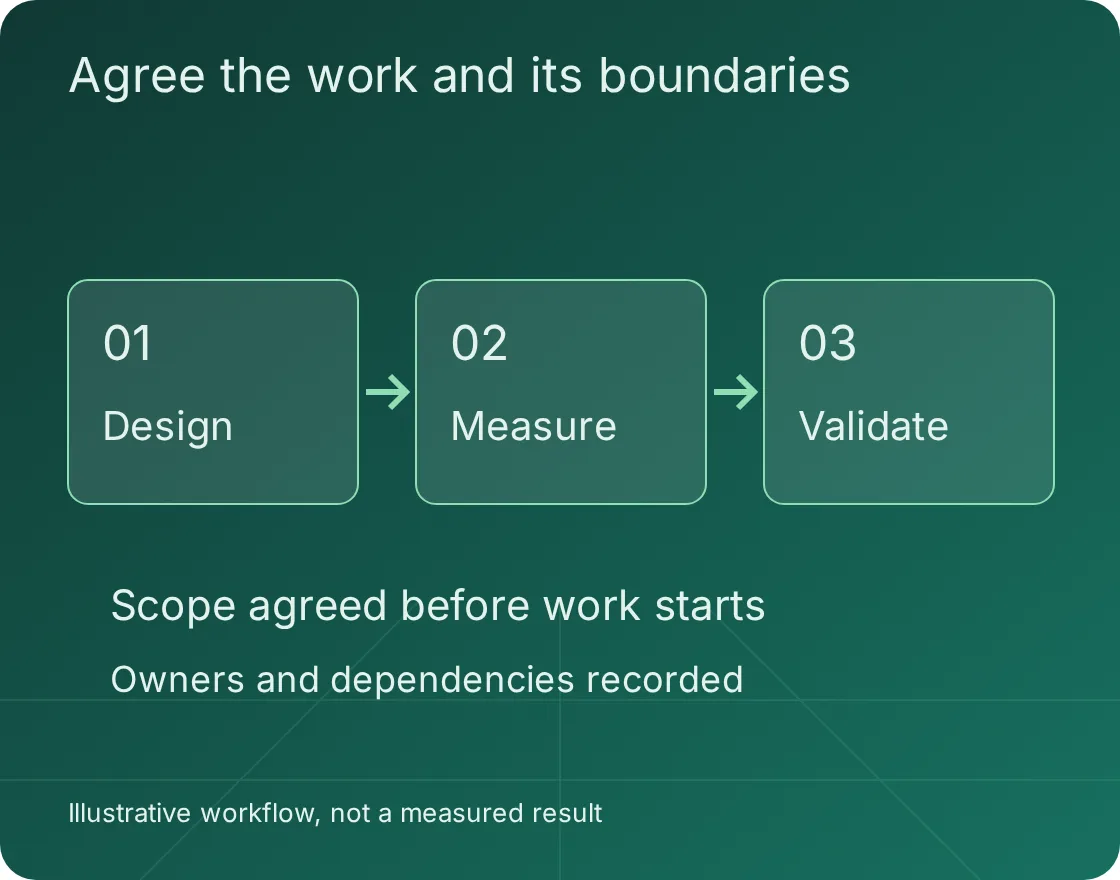
For a Sydney project, share the location and requirements with Global ITN. Scope, delivery arrangements, access and timing are confirmed before any work is agreed. The brief should identify what must happen on site and what your own technical team will retain.
- DefineSite, equipment and operational requirements.
- AgreeResponsibilities, access and acceptance checks.
- RecordFindings, exceptions and the next actions.
Separate the regional standard from the site conditions
A regional network standard can define reporting and approval requirements. The Sydney site brief still needs its own floor plans, mounting constraints, user groups and application needs. Copying an access-point count from another office is not a substitute for that assessment.
List the decisions that the regional team needs to make: whether to retain equipment, approve a new layout or accept an installation. The survey method and report should be chosen around those decisions, not around producing a generic set of heatmaps.
Cisco’s survey guidance covers single-floor and multi-floor requirements, digital floor plans and confirmation of the survey areas.

Agree responsibilities before arranging site work
Name the customer’s technical owner and the site contact. Confirm who provides floor plans, wireless configuration information, access permissions and any required escorts. Scheduling and delivery arrangements are confirmed during scoping, before an on-site commitment.
If several suppliers are involved, record who owns switching, internet access, authentication and cabling. Survey findings can expose a dependency without making the survey workstream responsible for changing every connected system.
Use a common report without losing local detail
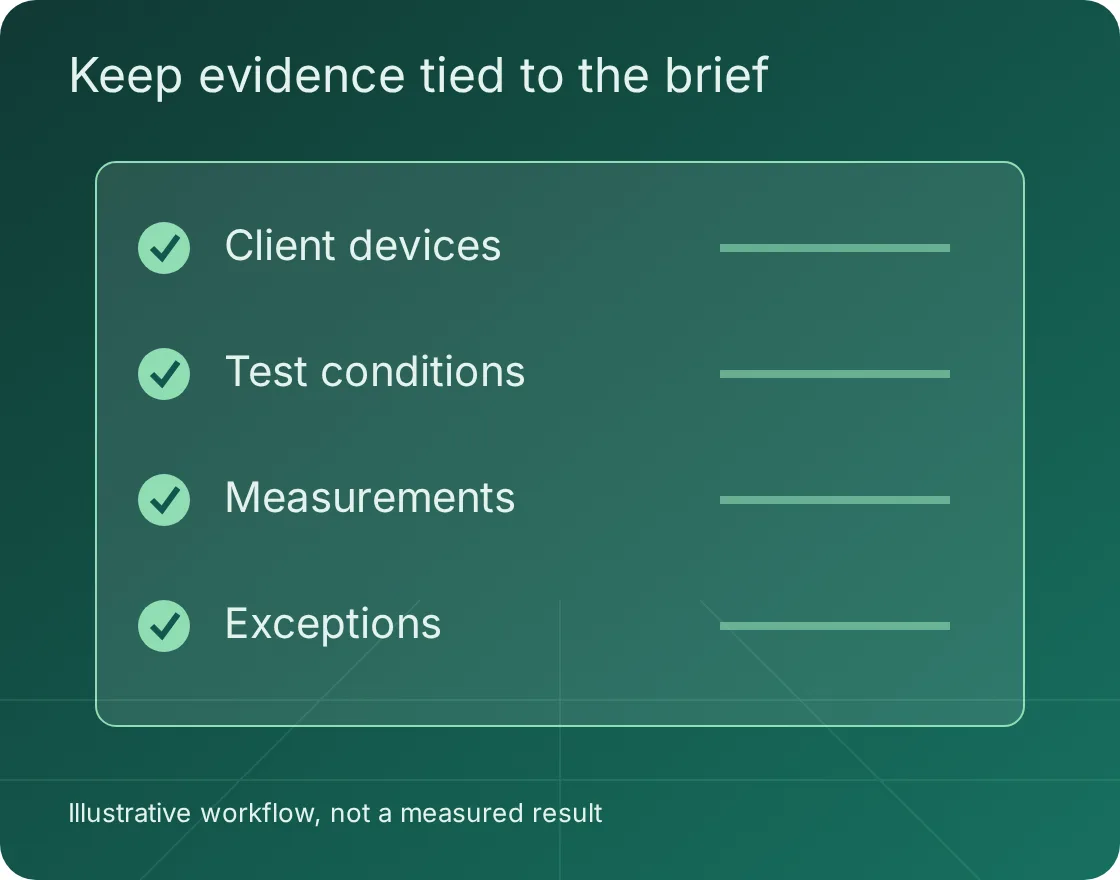
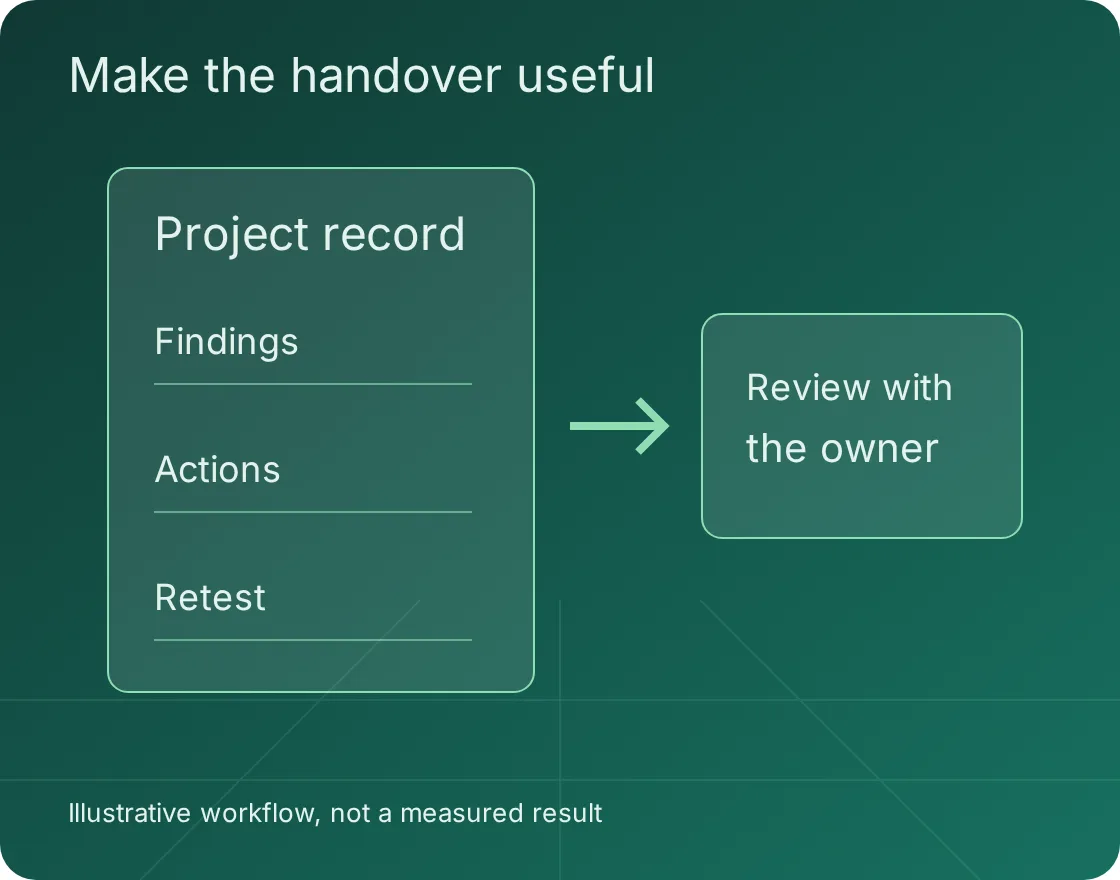
A useful handover separates the measured current state, design assumptions, proposed actions and unresolved questions. Consistent labels and a clear version date help a regional team compare sites without assuming that identical scores mean identical operational needs.
Include the areas tested and any inaccessible spaces. Record the device types and conditions used for performance or roaming checks. The report should make it possible to understand what was tested without requiring the reviewer to have attended the visit.
Move from findings to an approved change plan
Group actions by owner and dependency. Cabling or mounting work may need to happen before a wireless configuration change can be validated. Identify which changes need another design review and which can be checked against the existing brief.
If the survey supports a wider rollout, retain the Sydney-specific exceptions in the handover. A central template should help the next team understand them, not erase them. Installation, acceptance and ongoing network support remain separately defined stages.
Bring a brief the delivery team can use
Incomplete information can be identified during scoping. Do not treat an assumption as a confirmed site condition.
- The buildingFloor plans, layouts, access restrictions and project stage.
- The users and devicesApplications, client devices, movement paths and problem reports.
- The decisionDesign, diagnosis, refresh or acceptance of a finished installation.
- The outputRequired report format, test conditions, actions and owners.
Questions before you book the work
Can a regional IT team manage the project remotely?
The project brief can assign remote design and approval roles alongside site access responsibilities. Local attendance, timing and any delivery partners need confirmation for the specific location and scope.
Can reports follow our existing format?
Share the required template and acceptance criteria during scoping. The agreed output should retain measurement conditions, assumptions, exceptions and actions, not just a headline pass or fail.
Is an on-site survey always necessary?
The right method depends on the decision and available evidence. Predictive planning and an on-site assessment answer different questions; post-installation validation is another distinct step.
Discuss your Sydney project
Send the floor plans, device requirements and the decision the survey needs to support. We can discuss the brief and confirm whether the requested delivery arrangements can be offered before a commitment is made.