
Scope the project before committing to site work
Wi-Fi surveys in Glasgow
Build a refresh case from the network you have
Before replacing a Glasgow site’s wireless hardware, define the symptoms, evidence and business requirements. A survey should help distinguish a necessary design change from an assumption that every device needs replacing.

Scope the project before committing to site work
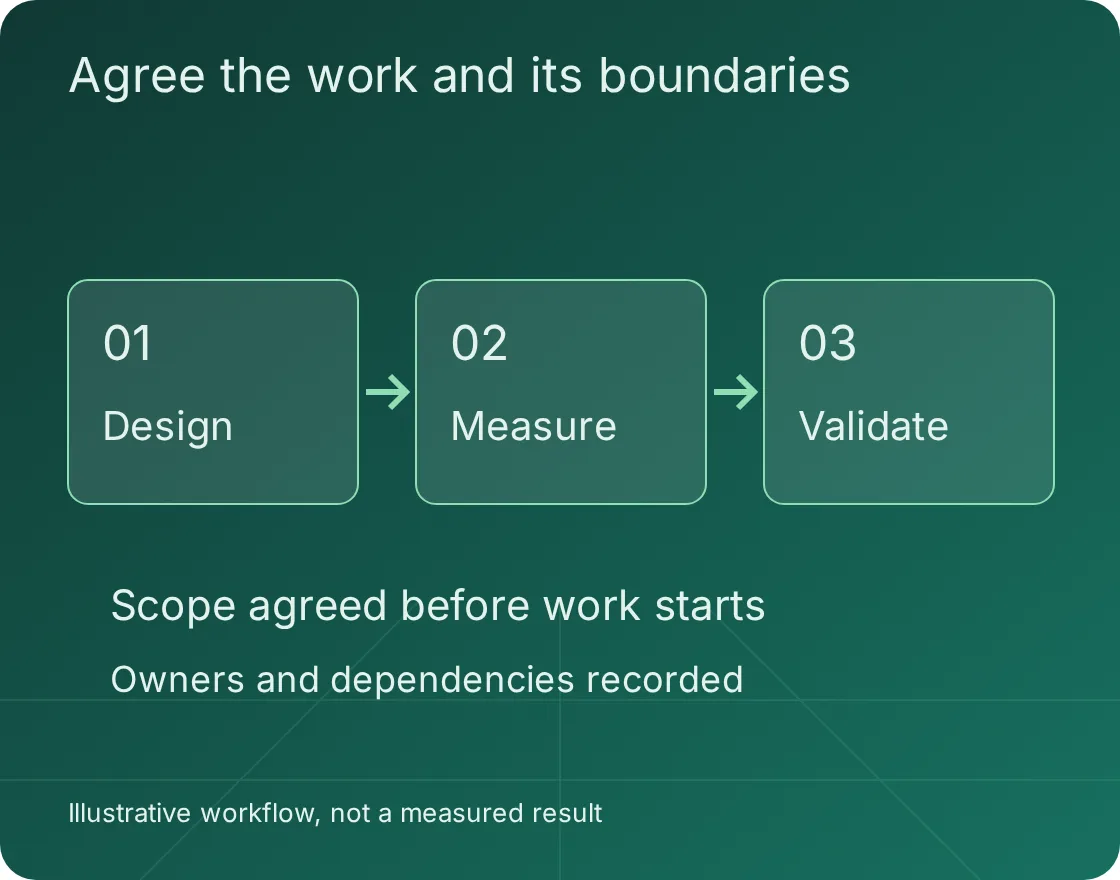
For a Glasgow project, share the location and requirements with Global ITN. Scope, delivery arrangements, access and timing are confirmed before any work is agreed. The brief should identify what must happen on site and what your own technical team will retain.
- DefineSite, equipment and operational requirements.
- AgreeResponsibilities, access and acceptance checks.
- RecordFindings, exceptions and the next actions.
Give the assessment a decision to answer
Explain why a refresh is being considered: a changed layout, new devices, user complaints or uncertainty about the existing design. Supply the available floor plan and equipment information, but mark gaps rather than treating incomplete records as verified.
For a Glasgow refresh request, separate the desired business outcome from a preferred technical solution. The assessment may support retaining some equipment, changing placement or planning a broader redesign. That conclusion should follow the requirements and evidence rather than being built into the brief.

Record the current environment before proposing changes
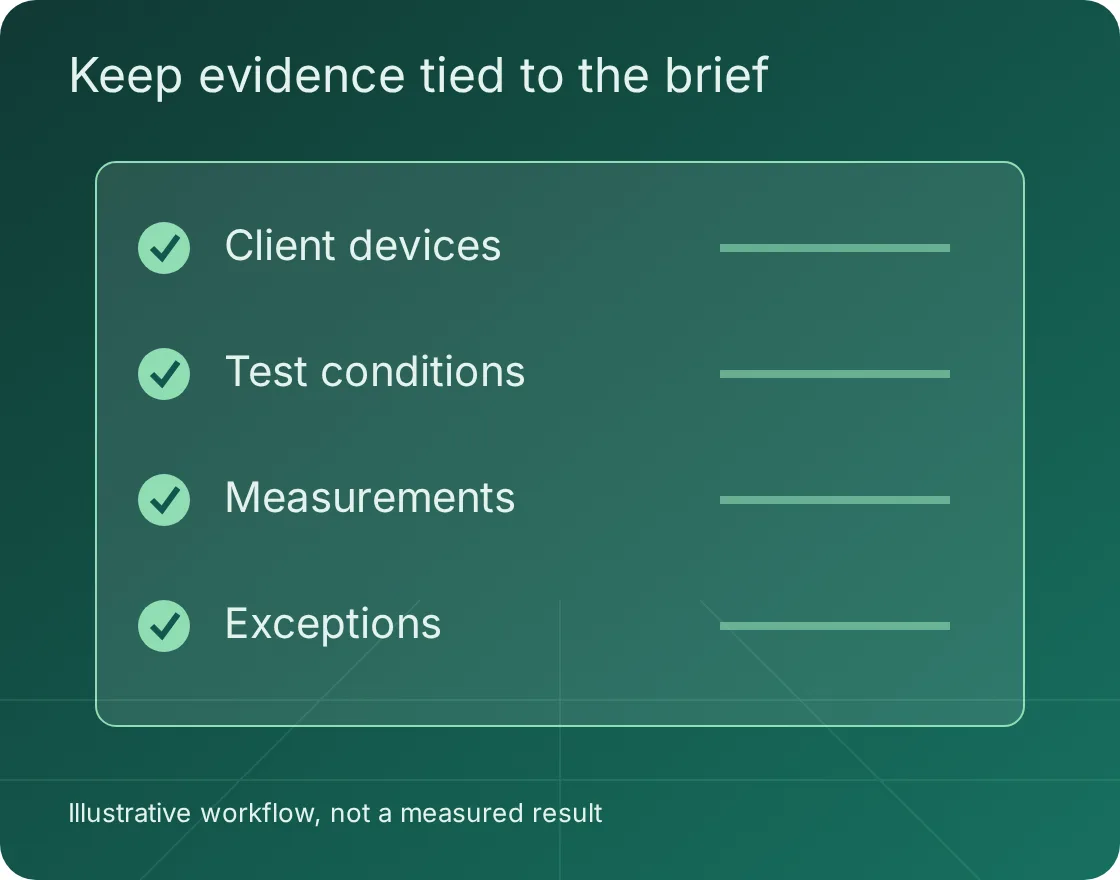
Agree the areas, client devices and conditions included in the assessment. Measurements can consider coverage, signal quality, interference and channel use. Where application performance or roaming matters, choose additional checks that relate to those requirements rather than relying only on a signal plot.
Keep the current configuration and building assumptions under change control during the investigation. If settings or physical positions change before the findings are reviewed, record that difference. The report is more useful when its measurements can be connected to a known environment.
Cisco identifies client-device and application requirements as inputs to survey planning.
Prioritise work by evidence and dependency
Ask recommendations to distinguish issues that are measured, suspected or outside scope. A cable route, switching limitation or authentication dependency may need attention from another owner. The wireless report should explain those handoffs without claiming to have proved an unrelated system fault.
A refresh plan can then separate design, procurement, physical installation and configuration. Keep the reason for each proposed change visible to the approver. Avoid presenting a new hardware list as the complete remedy when the diagnosis still has unresolved questions.
Agree how the refreshed network will be accepted
Define the relevant post-change checks before implementation. Repeat the important problem locations or movement routes using comparable devices and conditions where practical. A successful power-on or a new access-point count is not evidence that the original user problem has been addressed.
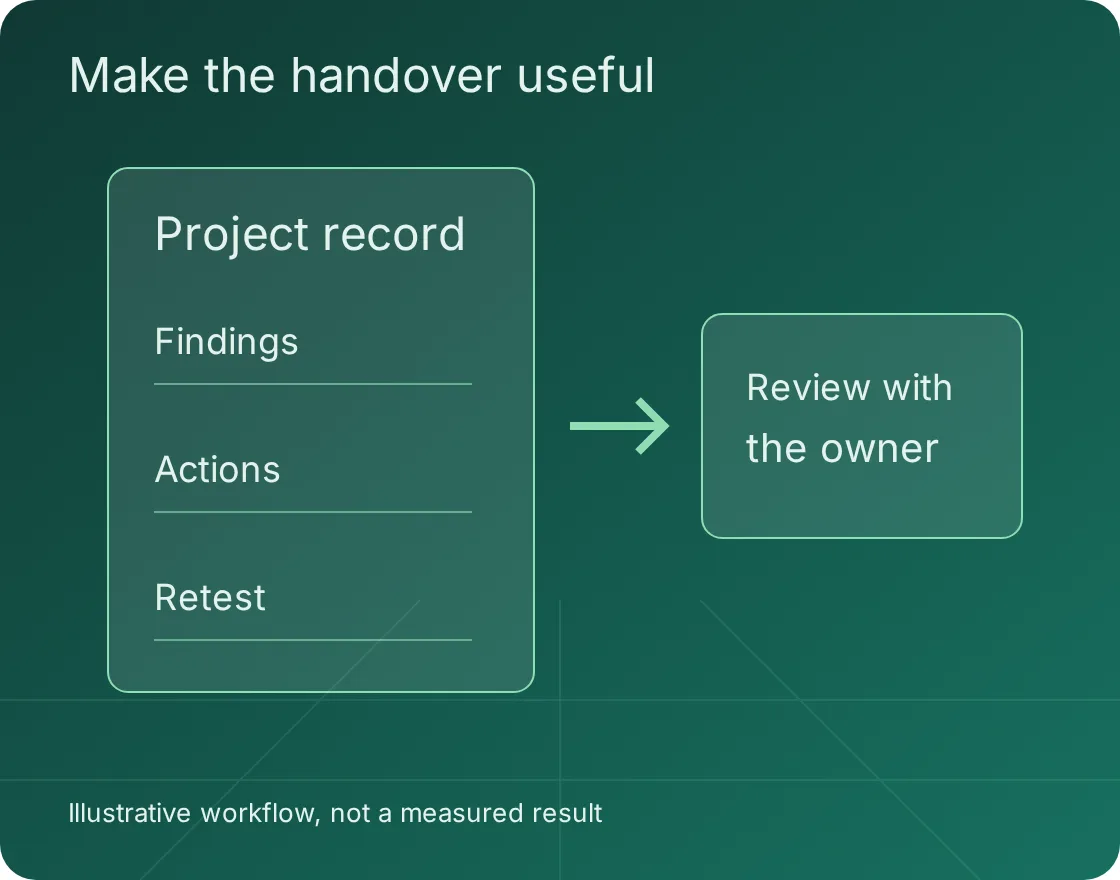
The final handover should retain the starting evidence, approved changes, validation results and open actions. That gives the technical owner a record for future support and a clear distinction between completed work and anything needing another investigation.
Bring a brief the delivery team can use
Incomplete information can be identified during scoping. Do not treat an assumption as a confirmed site condition.
- The buildingFloor plans, layouts, access restrictions and project stage.
- The users and devicesApplications, client devices, movement paths and problem reports.
- The decisionDesign, diagnosis, refresh or acceptance of a finished installation.
- The outputRequired report format, test conditions, actions and owners.
Questions before you book the work
Must every access point be replaced?
No replacement should be assumed from the request alone. The decision should take account of the measured environment, requirements, equipment constraints and the scope agreed with the technical owner.
Can we provide our existing drawings and reports?
Yes. Include their dates, known changes since they were produced and any limitations. Older material is useful context, but it should not be treated as a current measurement without checking.
Can a survey support a phased refresh?
It can help define priorities and acceptance checks for separate phases. Record the dependencies and make clear which areas and changes are included in each phase.
Discuss your Glasgow project
Send the floor plans, device requirements and the decision the survey needs to support. We can discuss the brief and confirm whether the requested delivery arrangements can be offered before a commitment is made.