
Scope the project before committing to site work
Wi-Fi surveys in Birmingham
Test the wireless route used by operational devices
For a Birmingham warehouse or operational site, a survey needs the device journeys, working layout and test conditions that matter to the operation. An open-space signal map is only part of the picture.
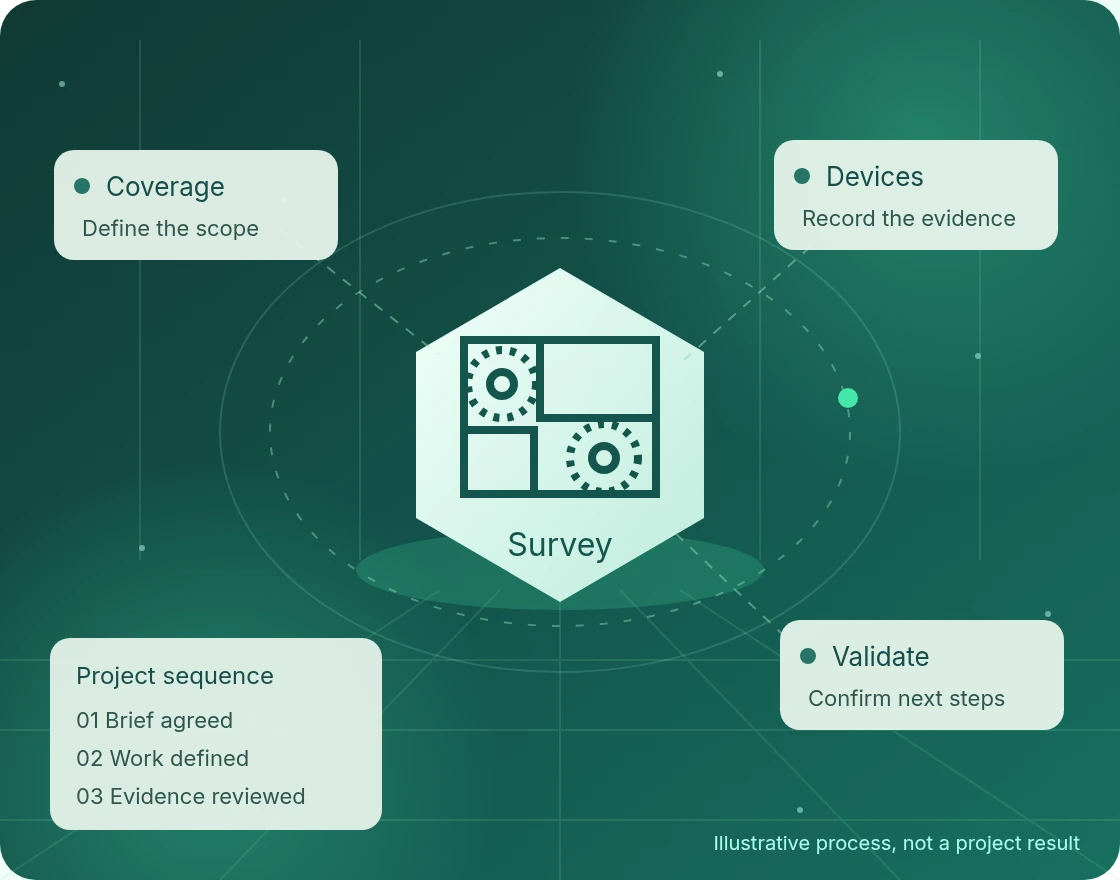
Scope the project before committing to site work
For a Birmingham project, share the location and requirements with Global ITN. Scope, delivery arrangements, access and timing are confirmed before any work is agreed. The brief should identify what must happen on site and what your own technical team will retain.
- DefineSite, equipment and operational requirements.
- AgreeResponsibilities, access and acceptance checks.
- RecordFindings, exceptions and the next actions.
Describe the layout in working conditions
Supply the aisle or work-area plan, rack heights and the locations where transactions must complete. Include goods-in, dispatch, packing and any associated office areas that belong in scope. Record planned layout changes so the assessment does not treat a temporary arrangement as the permanent environment.
A Birmingham operational brief should also describe stock and activity conditions relevant to testing. The environment may not look the same when empty, fully stocked or undergoing a change. Measurements should be accompanied by a record of those conditions and the limits they place on the findings.

Follow the device journey rather than a convenient path
List the handhelds, scanners or other wireless devices involved, with the applications and routes that matter. Agree how an interrupted transaction or connection will be observed and documented. A phone used in an open area is not a substitute for the intended operational device.
Plan safe access to the areas being assessed. Working near moving equipment, elevated mounting positions or restricted zones can introduce dependencies on site procedures and escorts. Assign those responsibilities before attendance rather than expecting the survey workstream to resolve them on arrival.
Cisco recommends including the rooms and offices that need coverage in the survey path.
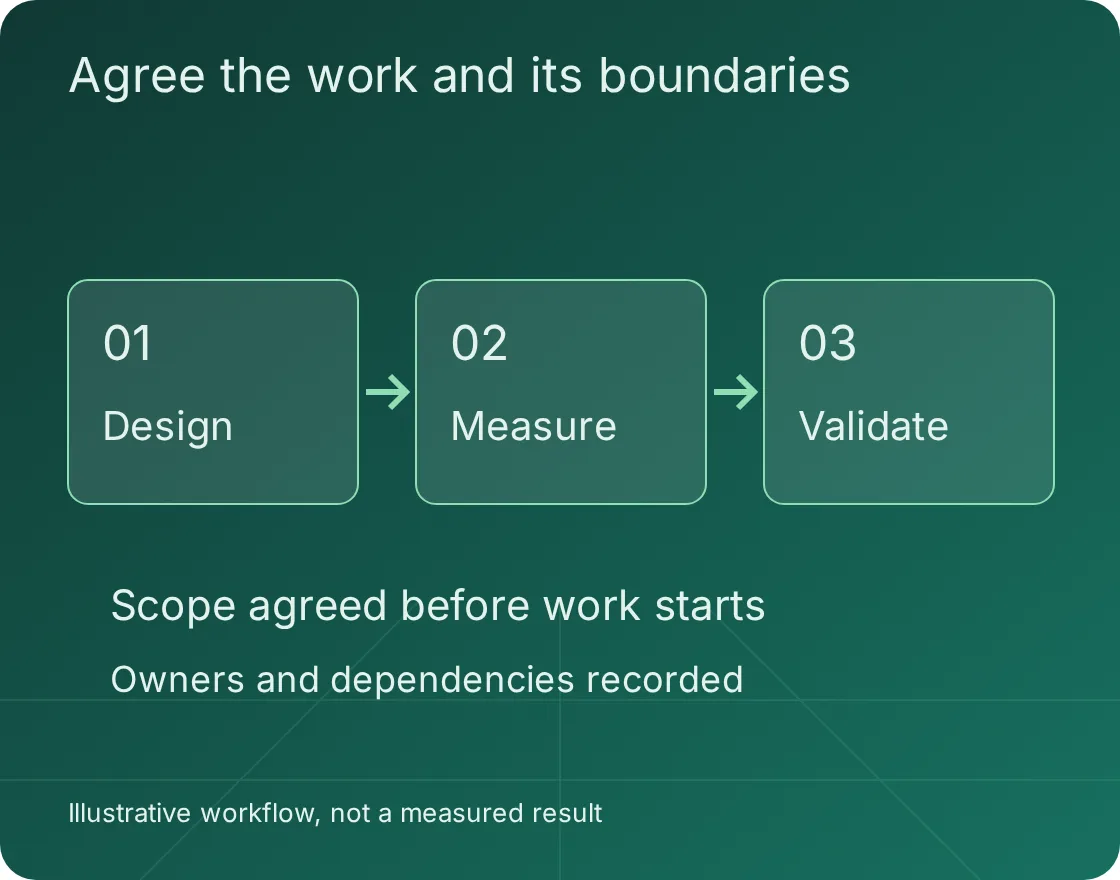
Turn findings into feasible changes
The assessment should connect radio-frequency findings to the physical and operational brief. Signal quality, interference and access-point placement may inform recommendations, but proposed locations still need mounting, cabling and access checks before implementation can be agreed.
Separate measured evidence from assumptions about the cause of an application fault. Authentication, wired connections and the application service may need additional investigation by their owners. The handover should identify that boundary and the next useful action rather than labelling every interruption as a coverage failure.
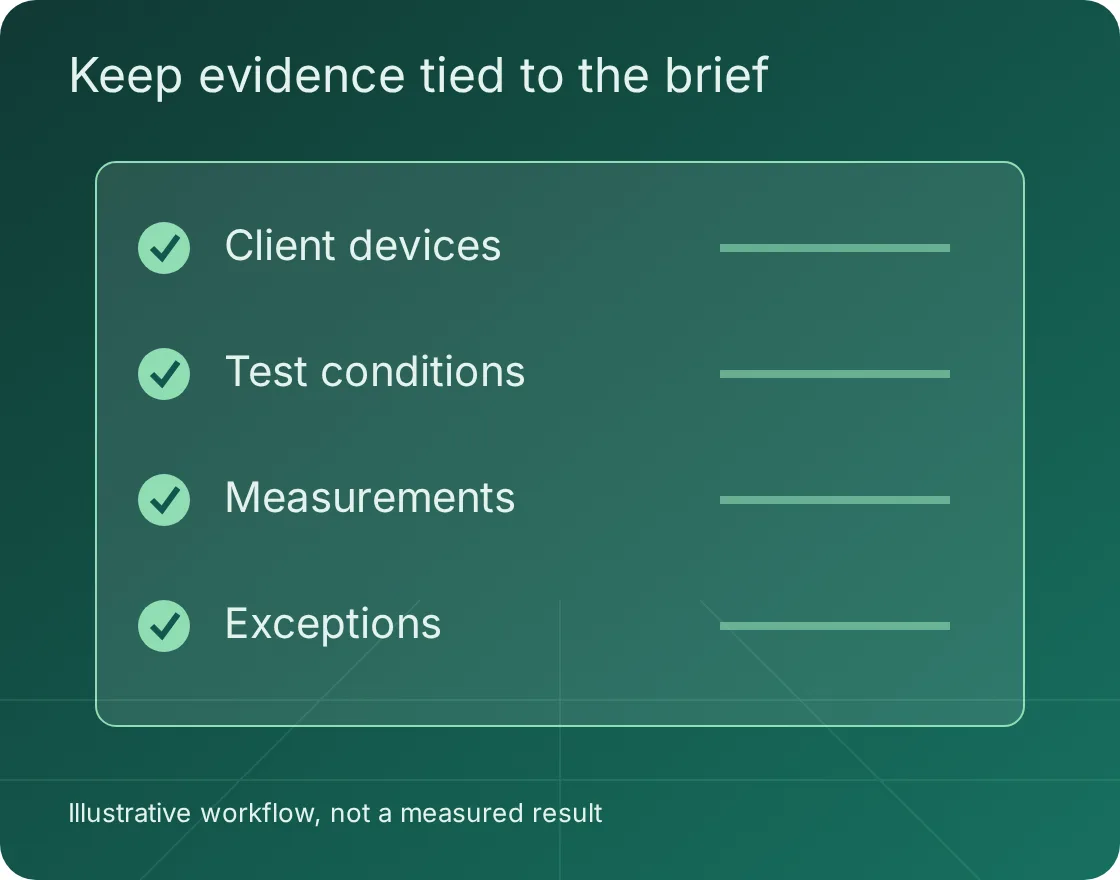
Retest the routes affected by the work
Before changes begin, agree which device journeys and operating conditions will be checked afterwards. Keep enough detail to compare the original issue with the result. If a route or working condition was unavailable, record it as an exception rather than folding it into a general success statement.
Retain the report, layout version and outstanding actions in the project record. Further changes to racking, stock patterns or operational devices may need another review. The earlier measurements describe the assessed environment, not every future arrangement of the site.
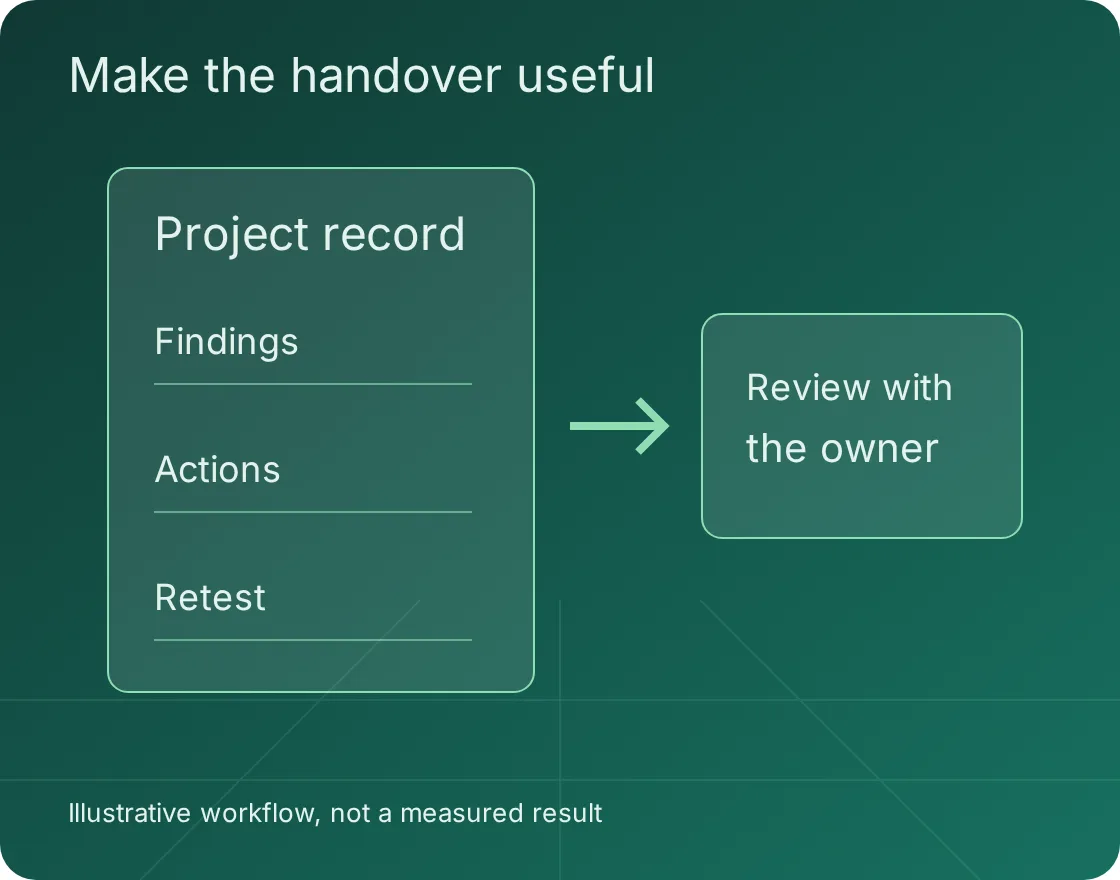
Bring a brief the delivery team can use
Incomplete information can be identified during scoping. Do not treat an assumption as a confirmed site condition.
- The buildingFloor plans, layouts, access restrictions and project stage.
- The users and devicesApplications, client devices, movement paths and problem reports.
- The decisionDesign, diagnosis, refresh or acceptance of a finished installation.
- The outputRequired report format, test conditions, actions and owners.
Questions before you book the work
Can the survey include office and operational areas?
Yes, they can be discussed in one brief, with different device, application and access requirements where appropriate. Keep each area visible in the scope and report.
What if the warehouse is being rearranged?
Provide the current and proposed plans and identify which decision is needed now. Predictive planning and measurements of the current environment have different purposes and should be labelled accordingly.
Does identifying a weak area include fixing it?
Not automatically. Recommendations, installation, configuration changes and validation need a defined scope, approval route and acceptance checks.
Discuss your Birmingham project
Send the floor plans, device requirements and the decision the survey needs to support. We can discuss the brief and confirm whether the requested delivery arrangements can be offered before a commitment is made.