
Scope the project before committing to site work
Wi-Fi surveys in Newcastle
Give a changing floor plan a wireless design brief
An office fit-out or layout change can move users, walls and mounting positions. A Newcastle project needs a clear record of the proposed environment before wireless decisions are fixed.

Scope the project before committing to site work
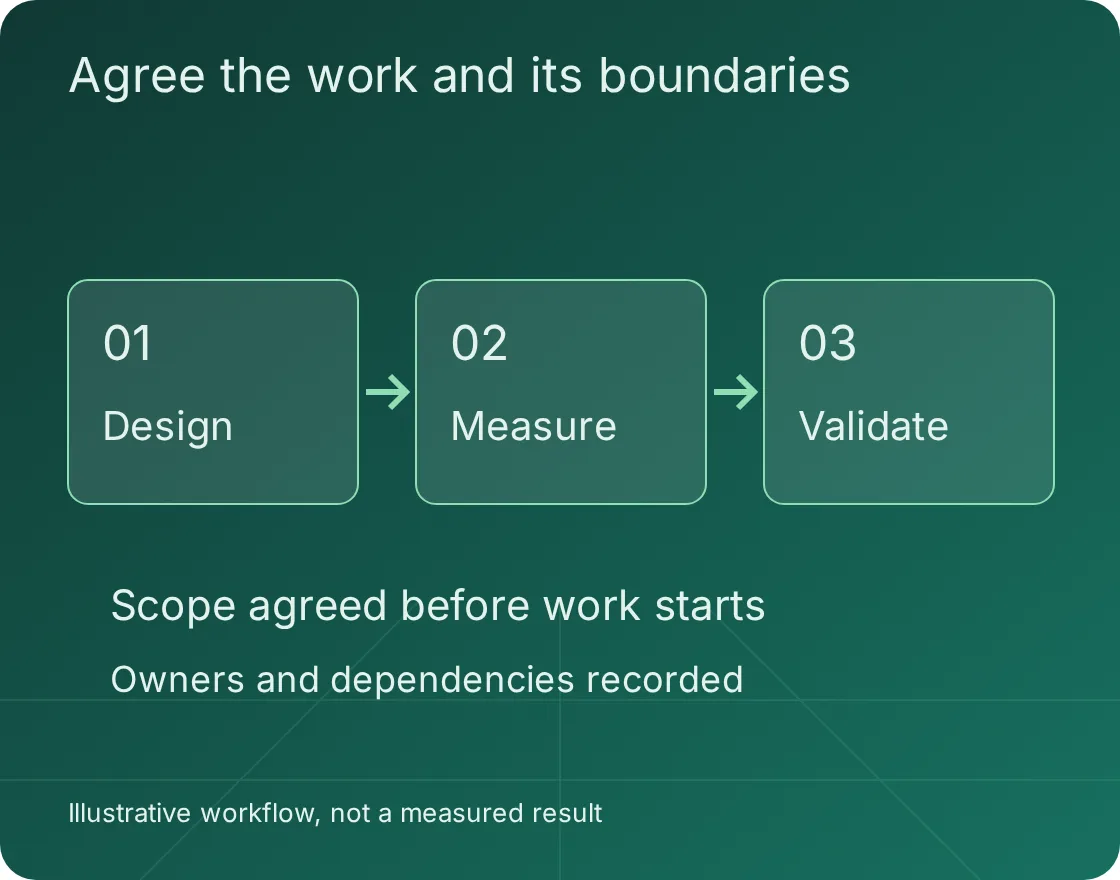
For a Newcastle project, share the location and requirements with Global ITN. Scope, delivery arrangements, access and timing are confirmed before any work is agreed. The brief should identify what must happen on site and what your own technical team will retain.
- DefineSite, equipment and operational requirements.
- AgreeResponsibilities, access and acceptance checks.
- RecordFindings, exceptions and the next actions.
Collect a usable building brief
Start with the current proposed floor plan, its revision date and the areas included in the project. Note intended room uses, planned occupancy and spaces where users will move while connected. Identify any parts of the building that are outside the work rather than leaving them implicit.
For a Newcastle fit-out, separate confirmed information from design assumptions. Ceiling details, partitions, services and access-point mounting restrictions may still change. A wireless model is easier to review when the team can see which building inputs are reliable and which need verification.

Use predictive planning for the right decision
Predictive work uses supplied building information and radio modelling to assess a proposed design. It can inform the equipment layout before installation, but it does not measure the completed environment. Keep the model version with the building information used to produce it.
Ask which decisions the model is intended to support: initial budgeting, access-point placement or a design review. That purpose affects the detail required. Site inspection, cabling feasibility and post-installation measurements remain separate considerations, especially when the final materials or mounting positions differ from the proposal.
Cisco describes predictive surveys as software-based planning that typically excludes field measurements.
Coordinate wireless, mounting and cabling responsibilities
A proposed access-point location must also be practical to install. Assign responsibility for cable routes, mounting approval, power or network connections, and any ceiling or access restrictions. The wireless workstream should identify those dependencies without assuming authority to alter the building design.
Before the fit-out plan is frozen, agree how design changes will reach the network owner. Moving a partition or changing a room use can affect the brief. A controlled revision is preferable to treating an old drawing as a standing instruction for an altered space.

Plan the installed-network check early
Define what will be checked after installation and who accepts the result. Identify the relevant devices, applications and movement routes, plus any spaces needing particular attention. The acceptance brief should remain tied to the approved design and the building actually delivered.
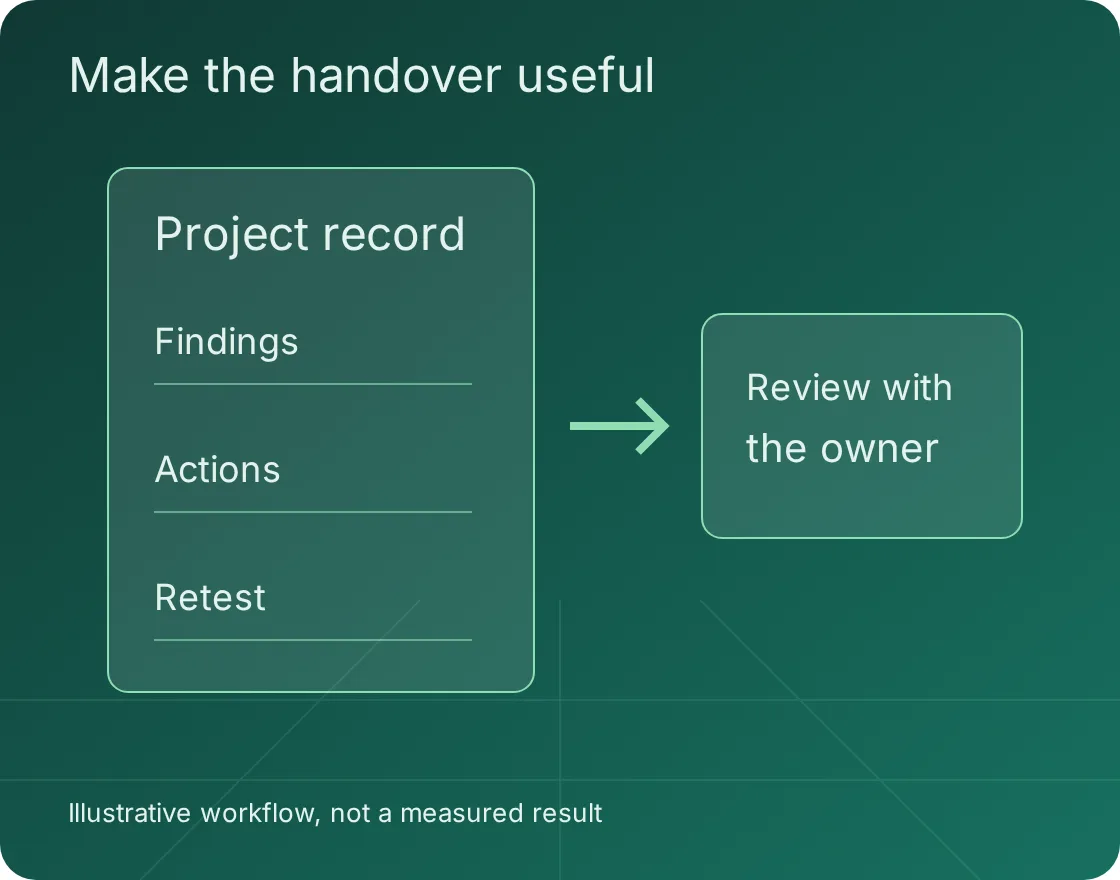
Retain the final access-point positions, model assumptions and measurement record in the handover. Where the installation differs from the plan, record the reason and any follow-up. This lets the technical owner distinguish a design change from an incomplete installation or an unresolved operational issue.
Bring a brief the delivery team can use
Incomplete information can be identified during scoping. Do not treat an assumption as a confirmed site condition.
- The buildingFloor plans, layouts, access restrictions and project stage.
- The users and devicesApplications, client devices, movement paths and problem reports.
- The decisionDesign, diagnosis, refresh or acceptance of a finished installation.
- The outputRequired report format, test conditions, actions and owners.
Questions before you book the work
Can a survey start before the fit-out is finished?
Predictive planning can start from suitable proposed drawings. The output must state its assumptions, and the completed installation needs its own agreed validation.
What if the floor plan changes?
Supply the revised drawing and identify the changes. The technical owner should decide which design assumptions and proposed positions need review before installation continues.
Does the wireless design authorise building work?
No. Cabling, mounting and building permissions need the responsible owners and their own agreed scope. A wireless drawing does not replace those approvals.
Discuss your Newcastle project
Send the floor plans, device requirements and the decision the survey needs to support. We can discuss the brief and confirm whether the requested delivery arrangements can be offered before a commitment is made.