
Scope the project before committing to site work
Wi-Fi surveys in Leeds
Plan wireless capacity around busy periods
When a busy area slows down, adding access points is not automatically the answer. Define the users, applications and occupied conditions a Leeds survey needs to assess.
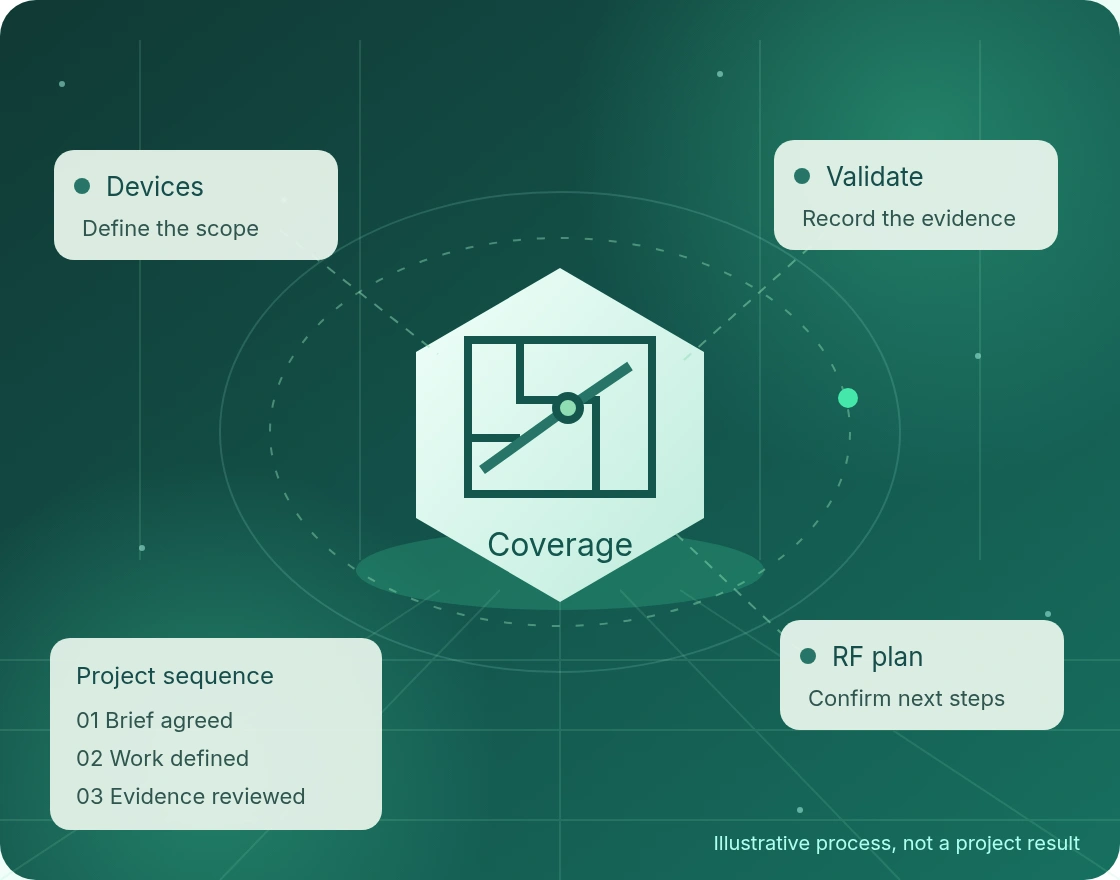
Scope the project before committing to site work
For a Leeds project, share the location and requirements with Global ITN. Scope, delivery arrangements, access and timing are confirmed before any work is agreed. The brief should identify what must happen on site and what your own technical team will retain.
- DefineSite, equipment and operational requirements.
- AgreeResponsibilities, access and acceptance checks.
- RecordFindings, exceptions and the next actions.
Start with the busiest useful test case
Identify the areas where connection quality matters most: meeting spaces, shared desks, reception or training rooms. Record typical use and known busy periods, alongside the client devices and applications involved. A maximum occupancy figure alone does not describe the traffic the network must carry.
For a Leeds office with uneven demand, the brief should distinguish a persistent coverage gap from a problem that appears only when an area fills. Capture when users notice the issue and whether it affects one application or several. Those observations help choose representative measurement conditions.
Cisco’s site-survey guidance recommends considering client capacity as well as coverage in high-density areas.

Consider the client as well as the access point
Different client devices can have different radio capabilities and connection behaviour. Agree which device types will be used during testing and how closely they represent the working environment. A result from a survey adapter does not establish identical performance for every laptop or phone.
Review the available wireless configuration and the physical layout alongside the measurements. Channel use, interference, access-point placement and the wired connection can all affect the investigation. Any proposed configuration change needs its own approval; measuring the present state is a different activity.
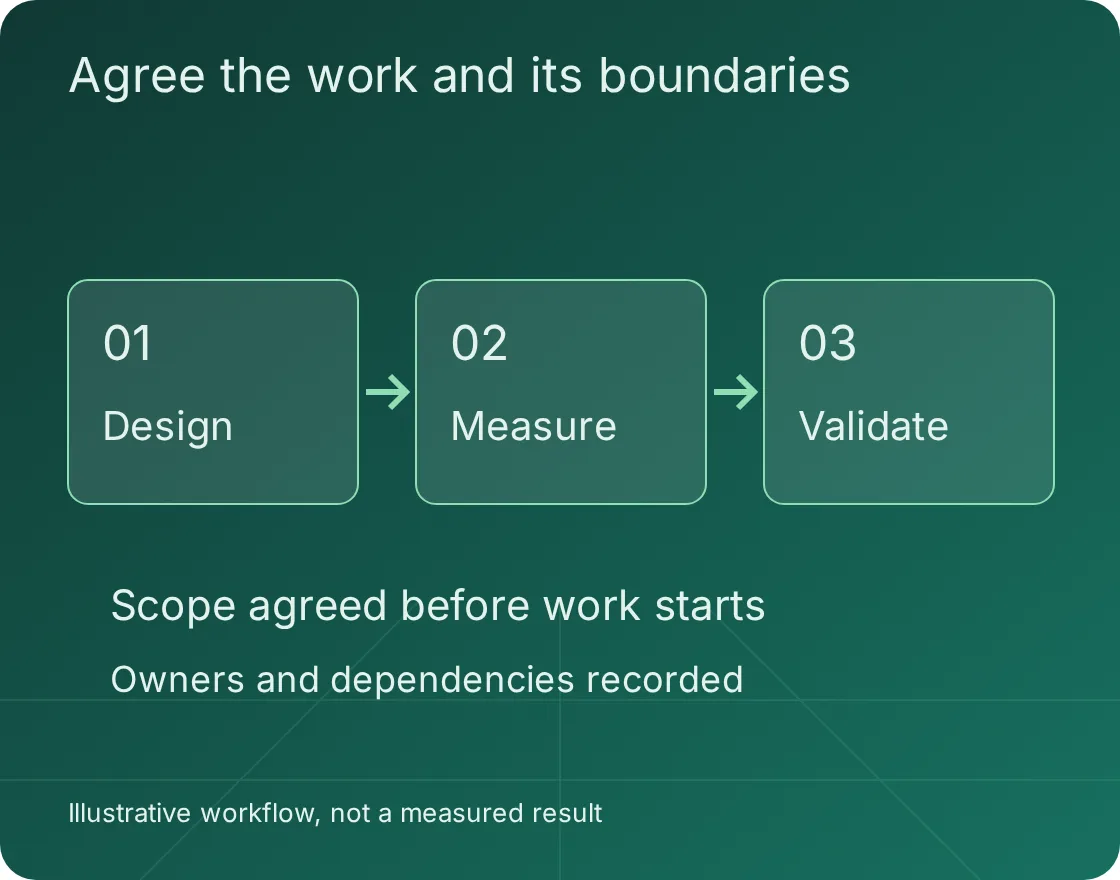
Keep capacity findings separate from a hardware order
Ask the report to explain the evidence behind any proposed change. Adding an access point, relocating one or adjusting the design addresses different causes. The recommendation should describe the requirement it serves and any mounting, cabling or configuration dependency that remains unresolved.
Where a predictive model informs a redesign, retain its inputs and limitations. Planned occupancy, wall materials and device assumptions may differ from the occupied site. Installation and validation should have separate acceptance steps rather than treating a model as proof that the finished network will perform as required.
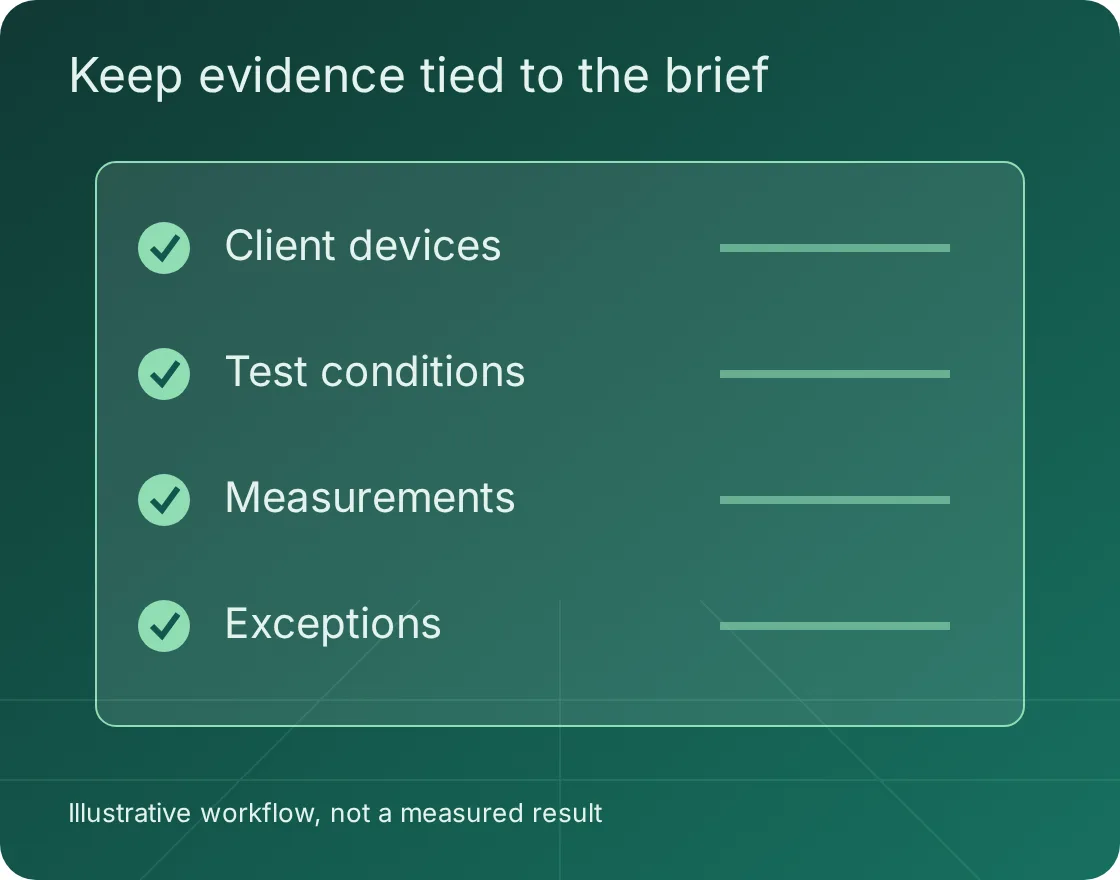
Validate the experience the business needs
Choose the checks before remedial work starts. Agree the relevant locations, applications, device types and operating conditions, and identify who will review the results. Coverage maps can inform that decision, but they do not replace the agreed application or capacity checks.
The handover should show which requirements were tested, the conditions present and the actions still open. If the site could not be assessed during a representative busy period, say so in the record. That limitation is more useful than an unexplained overall pass.
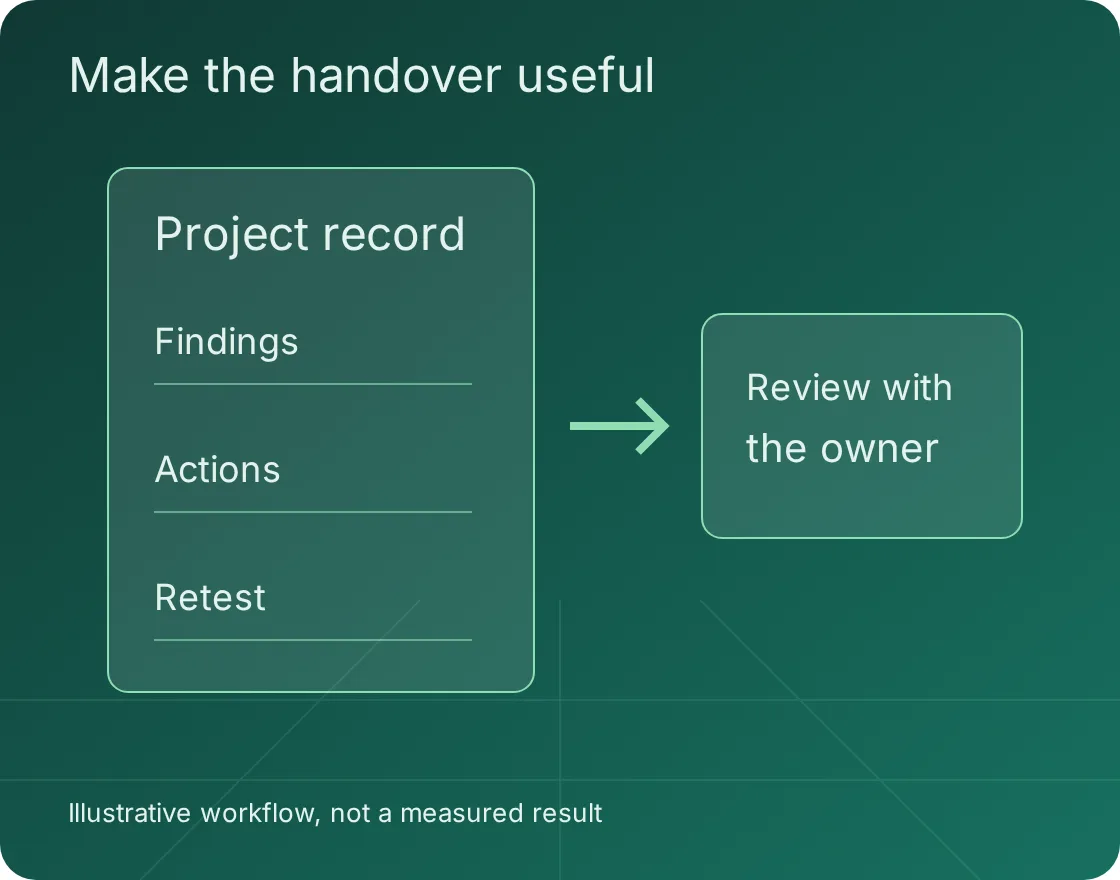
Bring a brief the delivery team can use
Incomplete information can be identified during scoping. Do not treat an assumption as a confirmed site condition.
- The buildingFloor plans, layouts, access restrictions and project stage.
- The users and devicesApplications, client devices, movement paths and problem reports.
- The decisionDesign, diagnosis, refresh or acceptance of a finished installation.
- The outputRequired report format, test conditions, actions and owners.
Questions before you book the work
Does slow Wi-Fi always mean insufficient coverage?
No. A strong received signal can coexist with capacity, interference, client, authentication or upstream problems. The brief should describe the symptom and required application experience rather than prescribing the cause.
Can testing take place outside working hours?
It can be discussed, but an empty site may not reproduce a busy-period issue. Agree which measurements are useful outside normal hours and what additional evidence is needed under representative use.
Will the report specify new equipment?
Only where the findings and agreed requirements support that recommendation. Hardware selection, procurement, installation and validation should each have a defined scope and owner.
Discuss your Leeds project
Send the floor plans, device requirements and the decision the survey needs to support. We can discuss the brief and confirm whether the requested delivery arrangements can be offered before a commitment is made.